How Technology is Revolutionizing Math Olympiad Preparation

Introduction

The landscape of mathematics competition preparation has undergone a dramatic transformation in recent years, driven by rapid advances in educational technology. Students preparing for the Singapore and Asian Schools Math Olympiad (SASMO) now have access to tools and resources that would have seemed like science fiction just a decade ago. From artificial intelligence that adapts to individual learning patterns to global communities of problem-solvers connecting across continents, technology is fundamentally reshaping how the next generation of mathematicians develops their skills.

Technology transforming online education

The Digital Learning Revolution

Traditional math olympiad preparation relied heavily on printed books, face-to-face coaching, and isolated individual study. While these methods remain valuable, they now form just one part of a much richer ecosystem of learning opportunities. The digital revolution has democratized access to high-quality mathematical content and created new possibilities for personalized, interactive learning experiences.

Breaking Down Geographic Barriers

Perhaps the most profound impact of technology has been eliminating geographic constraints on quality instruction. Students in small towns or rural areas, who previously had limited access to specialized math olympiad coaching, can now learn from expert teachers anywhere in the world. Online platforms connect students with experienced coaches regardless of physical location, creating opportunities that simply didn't exist before.

This democratization extends beyond individual instruction. Students can access recorded lectures from leading mathematics educators, participate in virtual study groups with peers from different countries, and join online communities where challenging problems are discussed and solved collaboratively. The walls that once confined mathematical learning to specific classrooms or tutoring centers have dissolved, replaced by a global network of resources and connections.
Computer-based mathematics learning

Personalized Learning Pathways

Every student's mathematical journey is unique, with individual strengths, weaknesses, and learning styles. Technology enables truly personalized learning experiences that adapt to each student's needs in real time. Intelligent tutoring systems analyze student performance, identify specific areas of difficulty, and automatically adjust the difficulty and focus of subsequent problems.

This adaptive approach represents a significant advance over the one-size-fits-all model of traditional instruction. A student struggling with number theory receives additional practice and explanation in that area, while another student who has mastered it quickly moves on to more advanced topics. No time is wasted on material already understood, and no student is left behind because the class moved on before they grasped a concept.

The result is more efficient learning, with students progressing at their optimal pace through material carefully calibrated to their current abilities. This personalization proves particularly valuable in math olympiad preparation, where the gap between students' preparation levels can be substantial.

Interactive Problem-Solving Platforms

The heart of math olympiad preparation has always been solving challenging problems. Technology has transformed this core activity from a solitary endeavor into an interactive, engaging experience with immediate feedback and rich learning opportunities.

Instant Feedback and Detailed Solutions

Traditional problem sets required students to wait days or weeks for their work to be reviewed by a teacher or coach. This delay between effort and feedback reduced learning effectiveness and made it difficult to maintain momentum. Modern online platforms provide instant feedback on student solutions, often accompanied by detailed step-by-step explanations.

Collaborative problem solving with technology

This immediate feedback loop accelerates learning dramatically. Students can identify and correct misconceptions right away, rather than practicing incorrect methods for extended periods. They can experiment with different solution approaches and quickly see which ones succeed. The psychological impact is equally important, as students maintain engagement and motivation when they see their progress in real time.

Rich Problem Collections with Metadata

Digital platforms host vast collections of olympiad problems, often organized by topic, difficulty level, competition source, and solution technique. Students can search for problems matching their current focus area, filter by appropriate difficulty, and track which problems they've attempted. This organization makes practice more efficient and targeted than working through unstructured problem lists.

Many platforms also include user ratings and comments about problems, providing additional context about which problems are particularly instructive or tricky. Students benefit from the collective wisdom of the community, learning not just from solving problems but from understanding how others have experienced and approached them.

Multiple Solution Methods and Community Insights

One of the most valuable aspects of mathematical problem-solving is seeing multiple approaches to the same problem. Digital platforms often feature solutions submitted by community members, showcasing different strategies and techniques. A student who solved a problem using one method can learn alternative approaches that might be more elegant or efficient.

This exposure to diverse solution methods develops mathematical flexibility and creativity. Students learn that problems often have multiple valid approaches, each offering different insights. They can compare their own solutions with others, identifying strengths and areas for improvement in their mathematical reasoning.

Artificial Intelligence and Machine Learning

Artificial intelligence is beginning to play an increasingly important role in math olympiad preparation, offering capabilities that extend beyond what human coaches can provide individually.

AI-Powered Tutoring Systems

Advanced AI tutoring systems can engage students in Socratic dialogue, asking probing questions that guide them toward solutions without simply giving away answers. These systems adapt their questioning style based on student responses, providing hints when students are stuck and pushing for deeper thinking when solutions come too easily.
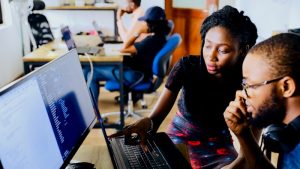
AI and technology collaboration in education

While these AI systems don't replace human coaches, they provide valuable supplementary support. Students can practice problem-solving at any hour, receiving guidance when human tutors aren't available. The AI tracks each student's progress over time, building a detailed picture of their strengths, weaknesses, and learning patterns that informs future instruction.

Predictive Analytics for Performance Optimization

Machine learning algorithms analyze patterns in student performance data to predict which topics they're likely to struggle with next, allowing for proactive intervention. These systems can identify when a student's performance is declining, suggesting they might be fatigued, frustrated, or encountering a conceptual barrier that needs attention.

Such predictive capabilities help prevent students from developing persistent misconceptions or losing motivation. By catching problems early, technology enables timely support that keeps students on track toward their goals. This data-driven approach to learning optimization represents a significant advance over purely intuitive methods of instruction.

Collaborative Learning Communities

Technology has transformed math olympiad preparation from an isolated individual activity into a collaborative community endeavor. Students now learn not just from teachers and textbooks, but from peers around the world.

Global Study Groups and Forums

Online forums and discussion boards bring together students passionate about mathematics from across Asia and beyond. These communities provide spaces where students can ask questions, share interesting problems, discuss solution strategies, and encourage one another. The collective knowledge of these communities often surpasses what any individual student or teacher could provide.

Digital resources for collaborative learning

Students benefit from exposure to different cultural approaches to mathematics, varied problem-solving traditions, and diverse perspectives on challenging concepts. This global exchange enriches understanding and helps students develop the kind of mathematical maturity that comes from seeing ideas approached from multiple angles.

Virtual Competitions and Mock Tests

Online platforms enable virtual competitions that simulate the experience of actual olympiads while providing detailed performance analytics. Students can take timed practice tests under realistic conditions, then receive comprehensive reports on their performance, including comparisons with peers at similar levels.

These virtual competitions serve multiple purposes. They build test-taking stamina and time management skills. They provide realistic benchmarks for student progress. They create healthy competition and motivation. Most importantly, they familiarize students with the pressure and format of actual competitions, reducing anxiety and building confidence.

Peer Teaching and Explanation

Technology facilitates peer-to-peer learning in powerful ways. Students can record video explanations of their solution methods, creating a library of peer-generated instructional content. They can work through problems together in virtual study rooms, discussing approaches in real time. They can review each other's written solutions, providing feedback and learning from different presentation styles.

Research consistently shows that teaching others is one of the most effective ways to deepen one's own understanding. Technology makes peer teaching accessible and scalable, allowing students to learn through explanation even when physical study partners aren't available.

Mobile Learning and Flexibility

The proliferation of smartphones and tablets has extended math olympiad preparation beyond the desktop computer, creating opportunities for learning anytime, anywhere.

Learning on the Go

Mobile apps allow students to engage with mathematical problems during time that would otherwise be unproductive. Commuting to school, waiting for appointments, or taking breaks between activities all become opportunities for mathematical thinking. Short problem sets designed for mobile interfaces make efficient use of these fragmented time periods.

Mobile learning applications

This flexibility proves particularly valuable for busy students balancing olympiad preparation with schoolwork, extracurricular activities, and personal time. Rather than requiring dedicated blocks of time for study, mobile learning enables consistent daily engagement with mathematics in manageable increments.

Spaced Repetition and Memory Enhancement

Mobile platforms excel at implementing spaced repetition algorithms that optimize long-term retention of mathematical concepts and techniques. Students receive review problems at scientifically determined intervals, maximizing the efficiency of their study time. Concepts are reinforced just before they would otherwise be forgotten, building durable long-term knowledge.

This approach addresses a common challenge in math olympiad preparation, where students learn powerful techniques but struggle to recall and apply them months later when needed. Spaced repetition ensures that learning transfers from short-term to long-term memory, creating a robust foundation of mathematical knowledge that students can draw upon reliably.

Video Learning and Visual Explanation

Video has emerged as a powerful medium for mathematical instruction, combining the benefits of visual representation, narrative explanation, and the ability to review and pause.

Access to Expert Instruction

Leading mathematics educators from around the world now create video content specifically for olympiad preparation. Students can learn from the best teachers regardless of geographic location, accessing instruction that might otherwise be completely unavailable to them. These videos cover everything from foundational concepts to advanced competition strategies.

Video instruction offers unique advantages for mathematical learning. Complex solution steps can be displayed visually while the instructor explains reasoning. Multiple camera angles can highlight different aspects of geometric diagrams or algebraic manipulations. Students can pause, rewind, and rewatch difficult sections until they achieve understanding.

Visual Problem-Solving Demonstrations

Many mathematical concepts benefit enormously from visual representation. Video platforms enable dynamic visualizations that bring abstract mathematical ideas to life. Geometric transformations can be animated, algebraic relationships can be graphed in real time, and complex problem-solving processes can be illustrated step by step.

This visual approach serves students with different learning styles, particularly those who think primarily in images rather than symbols or words. It also helps all students develop stronger visual intuition for mathematical relationships, an increasingly important skill in advanced mathematics.

Challenges and Considerations

While technology offers tremendous benefits for math olympiad preparation, thoughtful implementation is essential to realize these advantages while avoiding potential pitfalls.

Balancing Digital and Traditional Methods

Technology should enhance rather than replace traditional mathematical learning. Hand-written work remains essential for developing mathematical communication skills and deep conceptual understanding. Students need to practice writing clear, complete solutions by hand, as they will in actual competitions. Over-reliance on digital tools can weaken these crucial skills.

The most effective preparation programs combine the best of both worlds. Digital tools provide access to resources, personalized feedback, and collaborative opportunities. Traditional methods develop mathematical writing, careful reasoning, and independent problem-solving stamina. Wise students and coaches integrate both approaches thoughtfully.

Avoiding Distraction and Superficial Engagement

The same devices that enable powerful learning also offer endless distractions. Students must develop discipline to use technology purposefully for mathematical study rather than allowing it to fragment their attention. The temptation to check social media or play games during study sessions can undermine the deep, sustained focus that mathematical problem-solving requires.

Additionally, the ease of accessing solutions online can lead to superficial engagement with problems. Students might look up answers too quickly, robbing themselves of the struggle that leads to genuine learning. Maintaining the discipline to work through difficulties independently, using technology as a resource rather than a shortcut, requires conscious effort and good habits.

Ensuring Equity of Access

While technology has democratized access in many ways, it has also created new forms of inequality. Students without reliable internet access or adequate devices face disadvantages that their more connected peers don't encounter. The digital divide means that technology's benefits don't reach all students equally.

Future of technology in education

Addressing this challenge requires conscious effort from educators, schools, and technology providers. Creating offline-capable resources, providing devices to students in need, and designing platforms that work well on low-bandwidth connections all help ensure that technology's benefits reach broader audiences. The goal should be using technology to expand opportunity, not concentrate it among the already privileged.

The Future of Technology in Math Olympiad

Technological innovation continues at a rapid pace, promising even more transformative changes in how students prepare for mathematics competitions.

Virtual and Augmented Reality

Emerging virtual and augmented reality technologies offer intriguing possibilities for mathematical learning. Imagine exploring three-dimensional geometric structures in virtual space, manipulating complex surfaces and observing their properties from any angle. Picture walking through a visualization of a mathematical proof, seeing each step unfold in spatial relationship to others. These experiences could develop geometric intuition and spatial reasoning in ways that flat screens cannot match.

While such applications remain in early stages, they point toward a future where technology provides increasingly immersive and intuitive mathematical experiences. Students might one day learn topology by manipulating virtual surfaces or understand calculus by walking through visualizations of functions and their properties.

Advanced AI Coaching

Artificial intelligence systems continue to grow more sophisticated, promising coaching capabilities that approach the quality of expert human teachers. Future systems might engage in genuine mathematical dialogue, understanding student misconceptions at a deep level and providing targeted interventions. They could generate novel problems tailored to each student's specific needs, creating truly individualized learning experiences.

Such advanced AI won't replace human coaches, whose inspiration, mentorship, and personal connection remain irreplaceable. But it will augment human teaching, handling routine instruction and practice while freeing teachers to focus on higher-level mentorship and motivation. The combination of human wisdom and machine capability promises preparation experiences more powerful than either could provide alone.

Global Collaboration Platforms

Future platforms will likely enable even richer global collaboration, connecting students across countries in real-time problem-solving sessions. Virtual reality might allow students in different countries to work together on the same geometric diagram, manipulating it collaboratively as they discuss solutions. Artificial intelligence might translate between languages in real time, enabling seamless communication across linguistic barriers.

These advances will further strengthen the global mathematics community, creating connections and collaborations that enrich understanding and build friendships across cultures. The mathematical community of the future will be more connected, more diverse, and more supportive than ever before.

Conclusion: Embracing the Digital Future

Technology has fundamentally transformed math olympiad preparation, creating opportunities and capabilities that previous generations could scarcely imagine. Students today have access to personalized instruction, global communities, instant feedback, and vast resources that enable more effective and efficient learning than ever before.

Yet technology remains a tool, not a replacement for the essential elements of mathematical growth. Deep thinking, persistent effort, careful reasoning, and genuine understanding still require the same dedication they always have. Technology amplifies these efforts, making them more effective and more accessible, but it cannot substitute for them.

The most successful students will be those who learn to harness technology wisely, using digital tools to enhance their preparation while maintaining the fundamental practices that develop mathematical mastery. They'll combine the efficiency and reach of technology with the depth and rigor of traditional mathematical work. They'll connect with global communities while developing their own independent mathematical voice.

As technology continues to evolve, the possibilities for math olympiad preparation will only expand. Students who embrace these tools thoughtfully, who use them to deepen rather than shortcut their learning, will find themselves better prepared than ever to excel in SASMO and beyond. The digital revolution in mathematical education is just beginning, and its full impact on the next generation of mathematicians remains to be seen.

Technology opens doors, but students must still walk through them. Use these powerful tools wisely, and let them carry your mathematical journey to heights previously unreachable. The future of math olympiad preparation is digital, and it belongs to those ready to embrace it.
How to Build a Strong Math Olympiad Culture in Your School

Creating a thriving mathematics competition culture in your school transforms not just how students perform in contests, but how they think about mathematics itself. A strong math olympiad culture inspires curiosity, builds community, and develops problem-solving skills that extend far beyond competition results. This comprehensive guide walks educators through the process of establishing and nurturing a sustainable math olympiad program that enriches your entire school community.

Building math olympiad culture in schools

推荐

Laying the Foundation: Vision and Leadership

Every successful school program begins with clear vision and committed leadership. Before launching activities, take time to articulate what you hope to achieve and why it matters for your students.

Defining Your Purpose

Consider what mathematical excellence means for your school community. Perhaps you want to challenge high-achieving students who need more rigorous material. Maybe you aim to develop problem-solving skills across all ability levels. Or you might seek to build a community of mathematical thinkers who support each other's growth. Whatever your vision, clarity of purpose guides every subsequent decision.

Document your goals in a simple mission statement. This statement serves multiple functions. It helps you communicate the program's value to administrators, parents, and students. It keeps your efforts focused when opportunities and distractions arise. It provides a touchstone for evaluating whether activities align with your core objectives.

Classroom collaboration and learning

Securing Administrative Support

School administrators control resources, scheduling, and institutional priorities. Gaining their support early creates a foundation for sustainable growth. Present your vision in terms they value, whether that means academic excellence, student achievement, school reputation, or college readiness.

Prepare a brief proposal outlining your program goals, resource needs, and expected benefits. Include data about how math olympiad participation improves student outcomes, both in mathematics and in broader academic skills. Share success stories from similar schools. Demonstrate that you have a thoughtful plan, not just enthusiasm.

Administrative support opens doors to meeting spaces, scheduling flexibility, budget allocation, and institutional recognition. These resources prove essential as your program grows.

Building a Leadership Team

While one passionate teacher can start a math olympiad program, long-term success requires distributed leadership. Identify colleagues who share your enthusiasm or who bring complementary skills. A mathematics department chair provides institutional authority. A younger teacher might contribute energy and new ideas. Someone with technology skills can help with online resources and communication.

This leadership team shares responsibilities, prevents burnout, and ensures program continuity when individual teachers have schedule changes or leave the school. Regular team meetings keep everyone aligned and allow collaborative problem-solving.

Teacher guiding students in mathematics

推荐

Creating the Program Structure

With vision and leadership in place, design a program structure that serves your students effectively. The right structure balances challenge with accessibility, competition with collaboration, and depth with breadth.

Identifying and Recruiting Students

Students benefit from math olympiad at all achievement levels, though their experiences will differ. Create multiple entry points so every interested student can participate.

Start by identifying naturally curious students who excel in regular mathematics classes. These students often crave additional challenge. But also reach out to students who show creativity or persistence even if their grades aren't perfect. Some students thrive in competition settings precisely because the problems require thinking rather than memorization.

Recruitment happens through multiple channels. Mathematics teachers can recommend students personally. Assemblies or classroom presentations introduce the program to broader audiences. Posters in hallways and announcements capture attention. Most powerfully, students already in the program become ambassadors, recruiting friends through their enthusiasm.

Host an informational meeting for interested students and their parents. Explain what math olympiad involves, address common misconceptions about who can participate, and convey your excitement about the journey ahead. Provide clear information about time commitments, expectations, and next steps.

Designing the Training Curriculum

Your training program needs structure that balances skill development with engaging problem-solving. Avoid both approaches that prove counterproductive. Don't simply give students problem sets to work through alone. Similarly, don't lecture about problem-solving techniques without ample practice.

Instead, create sessions that blend instruction, guided practice, and independent exploration. Begin with a mini-lesson introducing a technique or topic. Work through several examples together, discussing different approaches and their relative merits. Then give students time to practice independently or in small groups, circulating to provide guidance and ask probing questions.

Mathematics learning resources and books

Organize your curriculum around fundamental topic areas including number theory, algebra, geometry, combinatorics, and logic. Within each area, sequence topics from foundational to advanced. Ensure students master basics before tackling sophisticated problems. This progression builds both skills and confidence.

Include regular review sessions that revisit earlier material. Mathematical understanding deepens through repeated exposure in different contexts. Problems that seemed impossible months ago become approachable with accumulated experience, and this progress motivates continued effort.

Scheduling and Logistics

Consistent meeting times create routine and demonstrate institutional commitment. Whether you meet twice weekly for an hour or once weekly for ninety minutes, protect this time fiercely. Students need to know that math olympiad preparation matters enough that other activities shouldn't routinely conflict.

Choose meeting spaces carefully. A dedicated classroom with adequate workspace, a whiteboard for demonstrations, and minimal distractions supports focused work. If possible, secure the same room for every meeting so students know where to go and you can leave materials set up between sessions.

Consider offering different meeting times for different groups. Students involved in sports might need an early morning session while others prefer after school. Multiple meeting times increase accessibility without forcing difficult choices on students.

Fostering a Positive Learning Environment

The culture you create within your program determines whether students thrive or merely participate. A positive environment celebrates effort, normalizes struggle, and builds community among participants.

Celebrating Effort Over Outcomes

In a culture focused solely on winning medals, most students will feel like failures most of the time. Instead, build a culture that recognizes and celebrates the process of mathematical growth. Acknowledge students who tackle problems beyond their current ability, even when they don't solve them. Recognize creative approaches and elegant reasoning, not just correct answers.

Share your own mathematical struggles. When students see their teachers grappling with difficult problems, persevering through confusion, and experiencing the satisfaction of eventual understanding, they learn that struggle is part of learning, not evidence of inadequacy.

Create recognition systems that highlight diverse contributions. The student who asks insightful questions contributes as much as the student who solves every problem. The peer who explains concepts clearly to others demonstrates mathematical mastery. The student who shows consistent improvement embodies the growth mindset you want to cultivate.

Students showing enthusiasm for learning

Normalizing Challenge and Failure

Math olympiad problems are meant to be difficult. Students accustomed to breezing through schoolwork may find this adjustment challenging. Help them understand that confusion and struggle aren't signs of weakness but indicators of growth.

When students encounter problems they can't solve, resist the urge to rescue them immediately. Instead, ask questions that guide their thinking without giving away the solution. What have they tried? Where did they get stuck? What might they try differently? This questioning approach builds problem-solving independence and resilience.

Share stories of famous mathematicians who struggled with problems for years before finding solutions. Discuss how the most valuable learning happens at the edge of your abilities, not in comfortable review of what you already know. Frame difficulty as opportunity rather than threat.

Building Peer Community

Math olympiad can feel isolating if students view it as purely individual competition. Counter this by fostering genuine community among participants. Students who feel connected to their peers in the program show greater persistence, deeper engagement, and higher achievement.

Design activities that require collaboration. Give small groups challenging problems to solve together. Have students present solutions to peers, developing communication skills alongside mathematical understanding. Create opportunities for advanced students to mentor newer participants, strengthening both groups in the process.

Organize team competitions alongside individual ones. When students work together toward common goals, they develop camaraderie and mutual support. They learn to celebrate each other's successes and provide encouragement during setbacks.

Beyond formal activities, create informal social opportunities. Pizza meetings, math-themed game sessions, or celebrations after competitions build relationships that strengthen the program. Students who have friends in the program attend more consistently and participate more fully.

Providing Quality Resources and Support

Students need access to appropriate materials and expert guidance to reach their potential. Invest thoughtfully in resources that support your program goals.

Curating Problem Collections

Quality problems drive quality learning. Build a collection of problems organized by topic and difficulty level that students can use for practice. Past SASMO papers provide excellent preparation for that specific competition. Books on mathematical problem-solving offer rich collections with detailed solutions.

Don't simply hand students lists of problems. Help them understand how to use problem collections effectively. Start with problems slightly above their current comfort zone. Work through solutions carefully, understanding not just what to do but why each step makes sense. Return to previously attempted problems after learning new techniques to see how their understanding has grown.

Create your own problems or modify existing ones to match your students' needs. Custom problems can target specific skills you want to develop or connect to topics students are studying in regular classes, showing the connections between competition mathematics and school curriculum.

Leveraging Technology

Online resources expand what your program can offer. Educational websites provide practice problems with instant feedback. Video tutorials explain concepts students can review at their own pace. Online forums connect your students with broader communities of mathematical thinkers.

Use technology to facilitate communication within your program. A messaging group allows students to share interesting problems they've found, ask questions between meetings, and celebrate each other's progress. This continuous connection keeps mathematics present in students' minds even when you're not meeting formally.

However, technology should enhance rather than replace human interaction. The irreplaceable elements of your program are the relationships between students and between students and teachers. Use technology to support these relationships, not substitute for them.

Connecting with External Experts

Your school doesn't exist in isolation. Connect with external resources and experts who can enrich your program. Local university mathematics departments often welcome opportunities to engage with talented high school students. Professors might give guest lectures, mentor individual students, or host visits to their campuses.

Celebrating mathematical success and achievement

Former students who participated in math olympiad and went on to study mathematics or related fields serve as powerful role models. Invite them to speak with current students about their experiences and how competition mathematics shaped their academic and career paths.

Attend coaching workshops or conferences when available. Connecting with other math olympiad coaches provides fresh ideas, moral support, and practical wisdom gained from others' experiences. The math competition community is generally generous with sharing resources and strategies.

Creating Traditions and Visibility

Traditions build program identity and create continuity across years. Visibility generates interest and attracts new participants. Together, they ensure your program grows and thrives over time.

Establishing Program Traditions

Traditions give students something to look forward to and create shared experiences that bind the group together. Consider starting annual events that become anticipated highlights of the school year.

A math olympiad banquet at year's end celebrates the collective work of all participants. Recognize not just top performers but also most improved students, most creative problem solvers, and best team collaborators. Share favorite problems from the year and invite students to present solutions they're particularly proud of.

Internal competitions throughout the year provide additional goals and excitement. A school-wide math puzzle contest, a team problem-solving challenge, or a math relay race creates variety within your program while building skills.

Document your program's history. Keep records of participants, achievements, and memorable moments. Share these stories with new students, helping them feel part of an ongoing tradition. When students see their names added to a list of previous participants, they connect to something larger than themselves.

Increasing School Visibility

When your school community understands and values your program, it thrives. Make your work visible through multiple channels.

School newsletters, websites, and social media accounts can highlight program activities and student achievements. When students compete in SASMO or other contests, celebrate their participation publicly. Share photos, describe interesting problems they've tackled, and congratulate their efforts.

Host events that involve the broader school community. A math puzzle fair open to all students introduces olympiad-style thinking to wider audiences. Students in your program can serve as facilitators, deepening their own understanding while sharing their enthusiasm.

Display student work in hallways. Posters featuring elegant solutions, interesting problems, or mathematical artwork created by program members catch attention and demonstrate the creative side of mathematics. When other students see their peers engaged in challenging, interesting mathematical work, curiosity grows.

Building Alumni Connections

Students who participate in your program don't simply graduate and disappear. They become part of an alumni network that strengthens the program for future generations. Maintain contact with former participants, sharing their achievements with current students and inviting them to contribute.

Alumni can mentor current students, guest lecture on advanced topics, or simply share encouragement. Knowing that former participants went on to succeed in various fields demonstrates the long-term value of the skills developed through math olympiad.

Create an alumni newsletter or online group where former participants can stay connected with each other and with the program. This network becomes a resource for current students seeking advice about college, careers, or simply the continued pursuit of mathematics.

Measuring Success and Adapting

Regular reflection on your program's effectiveness allows continuous improvement. Define success broadly and gather evidence of impact in multiple forms.

Defining Success Beyond Medals

While competition results matter, they don't capture your program's full impact. Students develop problem-solving skills, mathematical confidence, perseverance, and community connections that extend far beyond any single competition.

Track multiple indicators of success. How many students participate, and does this number grow over time? Do participants show improved performance in regular mathematics classes? Do they express greater confidence in their mathematical abilities? Do they pursue advanced mathematics courses or mathematics-related careers at higher rates than their peers?

Collect stories from students about how the program affected them. These qualitative data often reveal impact that numbers miss. A student who discovered a love of mathematics, who learned to persist through difficulty, or who found a community of like-minded peers experienced success regardless of competition results.

Gathering Feedback and Adapting

Your program should evolve based on what you learn. Regularly solicit feedback from students about what works well and what could improve. What activities do they find most valuable? What topics do they wish you covered? What barriers prevent full participation?

Be willing to experiment and adjust. If a particular teaching approach isn't resonating, try something different. If scheduling conflicts prevent key students from participating, explore alternative meeting times. If certain topics consistently prove too difficult or too easy, recalibrate your curriculum.

Share your reflections with your leadership team and with students themselves. When students see their feedback leading to concrete changes, they feel ownership of the program and invest more deeply in its success.

Sustaining Long-Term Growth

Programs that depend entirely on one passionate teacher remain vulnerable. Build systems that ensure continuity regardless of individual personnel changes.

Document your curriculum, resources, and procedures thoroughly. A new teacher taking over the program should be able to access organized materials, understand what has worked in the past, and build on existing foundations rather than starting from scratch.

Develop student leaders who can contribute to program culture and help newer participants. When veteran students take ownership of mentoring and community-building, the program becomes self-sustaining rather than dependent on constant teacher direction.

Cultivate relationships with administrators that transcend individual personnel. When school leadership understands and values your program, it receives ongoing support even as teachers and administrators change.

Conclusion: The Ripple Effect

Building a strong math olympiad culture in your school creates benefits that extend far beyond competition results. Students develop mathematical thinking skills, perseverance, collaboration abilities, and confidence that serve them throughout their lives. They discover that mathematics is creative, challenging, and beautiful, not just a collection of procedures to memorize.

The program you build becomes part of your school's identity. It attracts motivated students, engages families, and enhances your school's reputation for academic excellence. Teachers involved in the program grow professionally, deepening their own mathematical understanding and refining their teaching skills.

Most importantly, you create a community where mathematical curiosity is celebrated, where challenge is embraced, and where students support each other's growth. This community becomes a model for how education can inspire and transform young people.

Graduates celebrating mathematical excellence

The work of building this culture takes time, effort, and commitment. You'll face challenges, make mistakes, and experience setbacks. But the impact you have on students' lives and on your school community makes every effort worthwhile. Start where you are, use what you have, and build something that will benefit students for years to come.

Your school's math olympiad culture begins with your vision and grows through your daily actions. Every conversation with a curious student, every carefully chosen problem, every moment of encouragement contributes to something larger than yourself. Build well, and watch your students soar.

推荐

Online Customer Service
Contact Customer Service