Introduction
The landscape of mathematics competition preparation has undergone a dramatic transformation in recent years, driven by rapid advances in educational technology. Students preparing for the Singapore and Asian Schools Math Olympiad (SASMO) now have access to tools and resources that would have seemed like science fiction just a decade ago. From artificial intelligence that adapts to individual learning patterns to global communities of problem-solvers connecting across continents, technology is fundamentally reshaping how the next generation of mathematicians develops their skills.

The Digital Learning Revolution
Traditional math olympiad preparation relied heavily on printed books, face-to-face coaching, and isolated individual study. While these methods remain valuable, they now form just one part of a much richer ecosystem of learning opportunities. The digital revolution has democratized access to high-quality mathematical content and created new possibilities for personalized, interactive learning experiences.
Breaking Down Geographic Barriers
Perhaps the most profound impact of technology has been eliminating geographic constraints on quality instruction. Students in small towns or rural areas, who previously had limited access to specialized math olympiad coaching, can now learn from expert teachers anywhere in the world. Online platforms connect students with experienced coaches regardless of physical location, creating opportunities that simply didn't exist before.
This democratization extends beyond individual instruction. Students can access recorded lectures from leading mathematics educators, participate in virtual study groups with peers from different countries, and join online communities where challenging problems are discussed and solved collaboratively. The walls that once confined mathematical learning to specific classrooms or tutoring centers have dissolved, replaced by a global network of resources and connections.
Personalized Learning Pathways
Every student's mathematical journey is unique, with individual strengths, weaknesses, and learning styles. Technology enables truly personalized learning experiences that adapt to each student's needs in real time. Intelligent tutoring systems analyze student performance, identify specific areas of difficulty, and automatically adjust the difficulty and focus of subsequent problems.
This adaptive approach represents a significant advance over the one-size-fits-all model of traditional instruction. A student struggling with number theory receives additional practice and explanation in that area, while another student who has mastered it quickly moves on to more advanced topics. No time is wasted on material already understood, and no student is left behind because the class moved on before they grasped a concept.
The result is more efficient learning, with students progressing at their optimal pace through material carefully calibrated to their current abilities. This personalization proves particularly valuable in math olympiad preparation, where the gap between students' preparation levels can be substantial.
Interactive Problem-Solving Platforms
The heart of math olympiad preparation has always been solving challenging problems. Technology has transformed this core activity from a solitary endeavor into an interactive, engaging experience with immediate feedback and rich learning opportunities.
Instant Feedback and Detailed Solutions
Traditional problem sets required students to wait days or weeks for their work to be reviewed by a teacher or coach. This delay between effort and feedback reduced learning effectiveness and made it difficult to maintain momentum. Modern online platforms provide instant feedback on student solutions, often accompanied by detailed step-by-step explanations.

This immediate feedback loop accelerates learning dramatically. Students can identify and correct misconceptions right away, rather than practicing incorrect methods for extended periods. They can experiment with different solution approaches and quickly see which ones succeed. The psychological impact is equally important, as students maintain engagement and motivation when they see their progress in real time.
Rich Problem Collections with Metadata
Digital platforms host vast collections of olympiad problems, often organized by topic, difficulty level, competition source, and solution technique. Students can search for problems matching their current focus area, filter by appropriate difficulty, and track which problems they've attempted. This organization makes practice more efficient and targeted than working through unstructured problem lists.
Many platforms also include user ratings and comments about problems, providing additional context about which problems are particularly instructive or tricky. Students benefit from the collective wisdom of the community, learning not just from solving problems but from understanding how others have experienced and approached them.
Multiple Solution Methods and Community Insights
One of the most valuable aspects of mathematical problem-solving is seeing multiple approaches to the same problem. Digital platforms often feature solutions submitted by community members, showcasing different strategies and techniques. A student who solved a problem using one method can learn alternative approaches that might be more elegant or efficient.
This exposure to diverse solution methods develops mathematical flexibility and creativity. Students learn that problems often have multiple valid approaches, each offering different insights. They can compare their own solutions with others, identifying strengths and areas for improvement in their mathematical reasoning.
Artificial Intelligence and Machine Learning
Artificial intelligence is beginning to play an increasingly important role in math olympiad preparation, offering capabilities that extend beyond what human coaches can provide individually.
AI-Powered Tutoring Systems
Advanced AI tutoring systems can engage students in Socratic dialogue, asking probing questions that guide them toward solutions without simply giving away answers. These systems adapt their questioning style based on student responses, providing hints when students are stuck and pushing for deeper thinking when solutions come too easily.
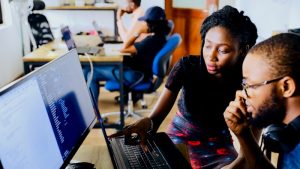
While these AI systems don't replace human coaches, they provide valuable supplementary support. Students can practice problem-solving at any hour, receiving guidance when human tutors aren't available. The AI tracks each student's progress over time, building a detailed picture of their strengths, weaknesses, and learning patterns that informs future instruction.
Predictive Analytics for Performance Optimization
Machine learning algorithms analyze patterns in student performance data to predict which topics they're likely to struggle with next, allowing for proactive intervention. These systems can identify when a student's performance is declining, suggesting they might be fatigued, frustrated, or encountering a conceptual barrier that needs attention.
Such predictive capabilities help prevent students from developing persistent misconceptions or losing motivation. By catching problems early, technology enables timely support that keeps students on track toward their goals. This data-driven approach to learning optimization represents a significant advance over purely intuitive methods of instruction.
Collaborative Learning Communities
Technology has transformed math olympiad preparation from an isolated individual activity into a collaborative community endeavor. Students now learn not just from teachers and textbooks, but from peers around the world.
Global Study Groups and Forums
Online forums and discussion boards bring together students passionate about mathematics from across Asia and beyond. These communities provide spaces where students can ask questions, share interesting problems, discuss solution strategies, and encourage one another. The collective knowledge of these communities often surpasses what any individual student or teacher could provide.
Students benefit from exposure to different cultural approaches to mathematics, varied problem-solving traditions, and diverse perspectives on challenging concepts. This global exchange enriches understanding and helps students develop the kind of mathematical maturity that comes from seeing ideas approached from multiple angles.
Virtual Competitions and Mock Tests
Online platforms enable virtual competitions that simulate the experience of actual olympiads while providing detailed performance analytics. Students can take timed practice tests under realistic conditions, then receive comprehensive reports on their performance, including comparisons with peers at similar levels.
These virtual competitions serve multiple purposes. They build test-taking stamina and time management skills. They provide realistic benchmarks for student progress. They create healthy competition and motivation. Most importantly, they familiarize students with the pressure and format of actual competitions, reducing anxiety and building confidence.
Peer Teaching and Explanation
Technology facilitates peer-to-peer learning in powerful ways. Students can record video explanations of their solution methods, creating a library of peer-generated instructional content. They can work through problems together in virtual study rooms, discussing approaches in real time. They can review each other's written solutions, providing feedback and learning from different presentation styles.
Research consistently shows that teaching others is one of the most effective ways to deepen one's own understanding. Technology makes peer teaching accessible and scalable, allowing students to learn through explanation even when physical study partners aren't available.
Mobile Learning and Flexibility
The proliferation of smartphones and tablets has extended math olympiad preparation beyond the desktop computer, creating opportunities for learning anytime, anywhere.
Learning on the Go
Mobile apps allow students to engage with mathematical problems during time that would otherwise be unproductive. Commuting to school, waiting for appointments, or taking breaks between activities all become opportunities for mathematical thinking. Short problem sets designed for mobile interfaces make efficient use of these fragmented time periods.

This flexibility proves particularly valuable for busy students balancing olympiad preparation with schoolwork, extracurricular activities, and personal time. Rather than requiring dedicated blocks of time for study, mobile learning enables consistent daily engagement with mathematics in manageable increments.
Spaced Repetition and Memory Enhancement
Mobile platforms excel at implementing spaced repetition algorithms that optimize long-term retention of mathematical concepts and techniques. Students receive review problems at scientifically determined intervals, maximizing the efficiency of their study time. Concepts are reinforced just before they would otherwise be forgotten, building durable long-term knowledge.
This approach addresses a common challenge in math olympiad preparation, where students learn powerful techniques but struggle to recall and apply them months later when needed. Spaced repetition ensures that learning transfers from short-term to long-term memory, creating a robust foundation of mathematical knowledge that students can draw upon reliably.
Video Learning and Visual Explanation
Video has emerged as a powerful medium for mathematical instruction, combining the benefits of visual representation, narrative explanation, and the ability to review and pause.
Access to Expert Instruction
Leading mathematics educators from around the world now create video content specifically for olympiad preparation. Students can learn from the best teachers regardless of geographic location, accessing instruction that might otherwise be completely unavailable to them. These videos cover everything from foundational concepts to advanced competition strategies.
Video instruction offers unique advantages for mathematical learning. Complex solution steps can be displayed visually while the instructor explains reasoning. Multiple camera angles can highlight different aspects of geometric diagrams or algebraic manipulations. Students can pause, rewind, and rewatch difficult sections until they achieve understanding.
Visual Problem-Solving Demonstrations
Many mathematical concepts benefit enormously from visual representation. Video platforms enable dynamic visualizations that bring abstract mathematical ideas to life. Geometric transformations can be animated, algebraic relationships can be graphed in real time, and complex problem-solving processes can be illustrated step by step.
This visual approach serves students with different learning styles, particularly those who think primarily in images rather than symbols or words. It also helps all students develop stronger visual intuition for mathematical relationships, an increasingly important skill in advanced mathematics.
Challenges and Considerations
While technology offers tremendous benefits for math olympiad preparation, thoughtful implementation is essential to realize these advantages while avoiding potential pitfalls.
Balancing Digital and Traditional Methods
Technology should enhance rather than replace traditional mathematical learning. Hand-written work remains essential for developing mathematical communication skills and deep conceptual understanding. Students need to practice writing clear, complete solutions by hand, as they will in actual competitions. Over-reliance on digital tools can weaken these crucial skills.
The most effective preparation programs combine the best of both worlds. Digital tools provide access to resources, personalized feedback, and collaborative opportunities. Traditional methods develop mathematical writing, careful reasoning, and independent problem-solving stamina. Wise students and coaches integrate both approaches thoughtfully.
Avoiding Distraction and Superficial Engagement
The same devices that enable powerful learning also offer endless distractions. Students must develop discipline to use technology purposefully for mathematical study rather than allowing it to fragment their attention. The temptation to check social media or play games during study sessions can undermine the deep, sustained focus that mathematical problem-solving requires.
Additionally, the ease of accessing solutions online can lead to superficial engagement with problems. Students might look up answers too quickly, robbing themselves of the struggle that leads to genuine learning. Maintaining the discipline to work through difficulties independently, using technology as a resource rather than a shortcut, requires conscious effort and good habits.
Ensuring Equity of Access
While technology has democratized access in many ways, it has also created new forms of inequality. Students without reliable internet access or adequate devices face disadvantages that their more connected peers don't encounter. The digital divide means that technology's benefits don't reach all students equally.

Addressing this challenge requires conscious effort from educators, schools, and technology providers. Creating offline-capable resources, providing devices to students in need, and designing platforms that work well on low-bandwidth connections all help ensure that technology's benefits reach broader audiences. The goal should be using technology to expand opportunity, not concentrate it among the already privileged.
The Future of Technology in Math Olympiad
Technological innovation continues at a rapid pace, promising even more transformative changes in how students prepare for mathematics competitions.
Virtual and Augmented Reality
Emerging virtual and augmented reality technologies offer intriguing possibilities for mathematical learning. Imagine exploring three-dimensional geometric structures in virtual space, manipulating complex surfaces and observing their properties from any angle. Picture walking through a visualization of a mathematical proof, seeing each step unfold in spatial relationship to others. These experiences could develop geometric intuition and spatial reasoning in ways that flat screens cannot match.
While such applications remain in early stages, they point toward a future where technology provides increasingly immersive and intuitive mathematical experiences. Students might one day learn topology by manipulating virtual surfaces or understand calculus by walking through visualizations of functions and their properties.
Advanced AI Coaching
Artificial intelligence systems continue to grow more sophisticated, promising coaching capabilities that approach the quality of expert human teachers. Future systems might engage in genuine mathematical dialogue, understanding student misconceptions at a deep level and providing targeted interventions. They could generate novel problems tailored to each student's specific needs, creating truly individualized learning experiences.
Such advanced AI won't replace human coaches, whose inspiration, mentorship, and personal connection remain irreplaceable. But it will augment human teaching, handling routine instruction and practice while freeing teachers to focus on higher-level mentorship and motivation. The combination of human wisdom and machine capability promises preparation experiences more powerful than either could provide alone.
Global Collaboration Platforms
Future platforms will likely enable even richer global collaboration, connecting students across countries in real-time problem-solving sessions. Virtual reality might allow students in different countries to work together on the same geometric diagram, manipulating it collaboratively as they discuss solutions. Artificial intelligence might translate between languages in real time, enabling seamless communication across linguistic barriers.
These advances will further strengthen the global mathematics community, creating connections and collaborations that enrich understanding and build friendships across cultures. The mathematical community of the future will be more connected, more diverse, and more supportive than ever before.
Conclusion: Embracing the Digital Future
Technology has fundamentally transformed math olympiad preparation, creating opportunities and capabilities that previous generations could scarcely imagine. Students today have access to personalized instruction, global communities, instant feedback, and vast resources that enable more effective and efficient learning than ever before.
Yet technology remains a tool, not a replacement for the essential elements of mathematical growth. Deep thinking, persistent effort, careful reasoning, and genuine understanding still require the same dedication they always have. Technology amplifies these efforts, making them more effective and more accessible, but it cannot substitute for them.
The most successful students will be those who learn to harness technology wisely, using digital tools to enhance their preparation while maintaining the fundamental practices that develop mathematical mastery. They'll combine the efficiency and reach of technology with the depth and rigor of traditional mathematical work. They'll connect with global communities while developing their own independent mathematical voice.
As technology continues to evolve, the possibilities for math olympiad preparation will only expand. Students who embrace these tools thoughtfully, who use them to deepen rather than shortcut their learning, will find themselves better prepared than ever to excel in SASMO and beyond. The digital revolution in mathematical education is just beginning, and its full impact on the next generation of mathematicians remains to be seen.
Technology opens doors, but students must still walk through them. Use these powerful tools wisely, and let them carry your mathematical journey to heights previously unreachable. The future of math olympiad preparation is digital, and it belongs to those ready to embrace it.