The perfect math competition for primary and secondary school students aiming for top awards—SASMO's new season is now open for registration!
The Singapore & Asian Schools Math Olympiad (SASMO), officially the Singapore Advanced Placement Mathematics Competition, is an international mathematics competition organized by the Singapore International Mathematics Competitions Centre (SIMCC). Established in 2006, SASMO is one of the largest mathematics competitions in Asia. SASMO certificates are among the most prestigious international competition certificates awarded to primary and secondary school students. Open to students in grades 1-12! (Advancement path: SASMO-SIMOC-IJMO-IMO)
Registration for the 2027 SASMO Mathematics Competition is now open!
Scan the QR code to join the exclusive SASMO learning community. Tons of preparation materials and trial courses await you!
We are an authorized test center.
I. 2026 SASMO Competition Schedule(Ended)
1. Registration Deadline:
March 29, 2026
2. Official Examination Date:
April 18, 2026 (Online)
II. SASMO Competition Rules
1. Participants:
G1-G12 students (grades 1-12) are eligible to participate.
2. Competition Language and Format:
Bilingual (Chinese and English), individual competition. Multiple choice questions, short answer questions, 90 minutes, 25 questions.
3. Competition Location:
Online/Offline.
Offline: SASMO partner test centers
Online: All students will participate using the online examination system.
4. Difficulty Levels:
Grades 1-12. Each level's test duration is 90 minutes.
Each level has a different test paper containing two parts with a total of 25 questions.
| First grade (primary school first grade) | Second grade (second grade of elementary school) |
| Third grade (primary school third grade) | Fourth grade (elementary school fourth grade) |
| Fifth grade (elementary school fifth grade) | Sixth grade (elementary school sixth grade) |
| Grade 7 | Grade 8 |
| Grade 9 | Grade 10 |
| Grade 11 | Grade 12 |
5. Qualification Methods
Singapore and Asian School Mathematics Olympiad (SASMO)
⇓
Singapore International Mathematical Olympiad Challenge (SIMOC)
⇓
International Junior Mathematics Olympiad (IJMO)
⇓
♣ International Junior Mathematics Olympiad (IMO)
III. SASMO Exam Format and Content
1. Exam Format
1. Section A: 15 multiple-choice questions, total 30 points (2 points each). Correct answer earns 1 point, unanswered question earns 0 points, and incorrect answer deducts 1 point.
2. Section B: 10 short-answer questions, total 40 points (4 points each). Correct answer earns 1 point, unanswered question earns 0 points, and incorrect answer does not deduct points.
3. Total score: 85 points. (To avoid negative scores, each candidate starts with 15 points.)
Note: Calculators are not allowed throughout the exam.
2. Exam Content
Based on past exam papers, there are 7 frequently tested question types: calculation and problem-solving, graphic recognition, application and practice, abstract generalization, logical reasoning, spatial imagination, and creative thinking.
| Grades 1-4 | • Arithmetic and Statistics
• Geometry and Measurement • Solving word problems using modeling methods (or any other non-algebraic methods) • Unconventional problem solving (including number patterns, separability tests, spatial visualization, logic problems, and simple cryptography) |
| Grades 5-6 | • Arithmetic and Statistics
• Geometry and Measurement • Solving word problems using modeling methods (or any other method, including algebra) • Unconventional problem solving (including number patterns, separability tests, spatial visualization, logic problems, and cryptography) |
| Grades 7 | • Arithmetic and Algebra
• Geometry, Graphics, and Measurement • Statistical Data • Unconventional Problem Solving (including numerical patterns, separability tests, spatial visualization, logic problems, and cryptography) |
| Grades 8 | • Arithmetic and Algebra
• Geometry, Graphics, and Measurement • Pythagorean Theorem • Statistical Data • Unconventional Problem Solving (including numerical patterns, separability tests, spatial visualization, logic problems, and cryptography) |
| Grades 9-12 | • Arithmetic and Algebra
• Geometry, Graphics, and Measurement • Pythagorean Theorem and Trigonometry • Statistics and Probability • Unconventional Problem Solving (including numerical patterns, separability tests, spatial visualization, logic problems, and cryptography) |
The seven most frequently tested question types are: calculation and problem-solving, graphic recognition, application and practice, abstract generalization, logical reasoning, spatial imagination, and creative thinking.
1. Application and Practice Questions (approximately 40%): Primarily test knowledge of age, cycles, sum and difference problems, dates and calendars, etc.
2. Graphic Recognition (approximately 20%): Often tests comparison, sequencing, manipulation, and three-dimensional shapes.
3. Logical Reasoning Questions: These questions are flexible and varied, closely related to real-world problems, testing students' practical application abilities and logical thinking skills.
4. Creative Thinking Questions: These are present throughout all question types, including graphic problems, application problems, and logical reasoning questions, and represent a challenging aspect of the exam.
IV. SASMO Past Exam Questions (Examples)
Partial Sample Questions
| years | G2 | G3 | G4 | G5 | G6 | G7 | G8 | G9 | G10 |
| 2024 | Past Exam Questions | Past Exam Questions | Past Exam Questions | Past Exam Questions | Past Exam Questions | Past Exam Questions | Past Exam Questions | Past Exam Questions | Past Exam Questions |
| 2023 | Past Exam Questions | Past Exam Questions | Past Exam Questions | Past Exam Questions | Past Exam Questions | Past Exam Questions | Past Exam Questions | Past Exam Questions | Past Exam Questions |
| 2022 | Past Exam Questions | Past Exam Questions | Past Exam Questions | Past Exam Questions | Past Exam Questions | Past Exam Questions | Past Exam Questions | Past Exam Questions | Past Exam Questions |
| 2021 | Past Exam Questions | Past Exam Questions | Past Exam Questions | Past Exam Questions | Past Exam Questions | Past Exam Questions | Past Exam Questions | Past Exam Questions | Past Exam Questions |
| 2020 | Past Exam Questions | Past Exam Questions | Past Exam Questions | Past Exam Questions | Past Exam Questions | Past Exam Questions | Past Exam Questions | Past Exam Questions | Past Exam Questions |
| 2019 | Past Exam Questions | Past Exam Questions | Past Exam Questions | Past Exam Questions | Past Exam Questions | Past Exam Questions | Past Exam Questions | Past Exam Questions | Past Exam Questions |
| 2018 | Past Exam Questions | Past Exam Questions | Past Exam Questions | Past Exam Questions | Past Exam Questions | Past Exam Questions | Past Exam Questions | Past Exam Questions | Past Exam Questions |
| 2017 | Past Exam Questions | Past Exam Questions | Past Exam Questions | Past Exam Questions | Past Exam Questions | Past Exam Questions | Past Exam Questions | Past Exam Questions | Past Exam Questions |
| 2016 | Past Exam Questions | Past Exam Questions | Past Exam Questions | Past Exam Questions | Past Exam Questions | Past Exam Questions | Past Exam Questions | Past Exam Questions | Past Exam Questions |
| 2015 | Past Exam Questions | Past Exam Questions | Past Exam Questions | Past Exam Questions | Past Exam Questions | Past Exam Questions | Past Exam Questions | Past Exam Questions | Past Exam Questions |
| 2014 | Past Exam Questions | Past Exam Questions | Past Exam Questions | Past Exam Questions | Past Exam Questions | Past Exam Questions | Past Exam Questions | Past Exam Questions | Past Exam Questions |
Scan the QR code to join the SASMO exclusive learning community, where a wealth of preparation materials and trial courses await you!
V. SASMO Awards
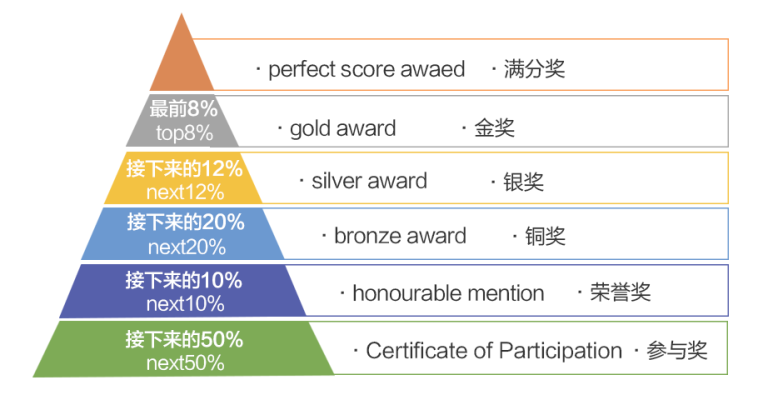
Perfect Score Award:
The winner of a perfect score will receive a special medal, a paper certificate, and a digital certificate. They will also qualify for the SIMOC (Global Competition) and the STEAM AHEAD-IJMO (Global Competition), with the opportunity to join the International Youth Honor Society (IJHS) and the Young Achievement Leaders Academy (YALA), and receive a $100 cash prize.
Gold Award: Top 8%
The winner will receive a medal, a paper certificate, and a digital certificate. They will also qualify for the SIMOC (Global Competition) and the STEAM AHEAD-IJMO (Global Competition), with the opportunity to join the International Youth Honor Society (IJHS) and the Young Achievement Leaders Academy (YALA).
Silver Award: 8%-20%
The winner will receive a medal, a paper certificate, and a digital certificate. They will also qualify for the SIMOC (Global Competition) and the STEAM AHEAD-IJMO (Global Competition).
Bronze Award: 21%-40%
Receive a medal, paper certificate, and electronic certificate, and qualify for the SIMOC competition.
Honorary Award: 41%-50%
Receive an electronic certificate.
Participation Award: 51%-100%
Receive an electronic certificate.
VI. Why Participate in the SASMO Singapore Mathematics Competition?
High prestige; Singapore's mathematics education is widely recognized worldwide. SASMO is a high-prestige international mathematics competition organized by the Singapore International Competitions Committee.
Low entry requirements, high award rate, covers all age groups; G1-G12 students can register, and the difficulty is divided according to grade level. There are few high-prestige competitions for younger children, and SASMO is very suitable as an introductory competition for children, stimulating their interest in mathematics. SASMO has 6 award levels, including perfect score, gold, silver, bronze, honorary, and participation awards. 40% of participating students have the opportunity to win a bronze award or higher.
Aligned with the international system and featuring a comprehensive advancement path, it is more suitable for elementary school children than the AMC8, and all participants can ultimately advance to the pinnacle of mathematics competitions—the IMO.
VII. Introduction to the CPA Teaching Methodology
The SASMO competition originated from the CPA teaching methodology. The core modeling of the CPA teaching methodology is a process of transforming complexity into simplicity.
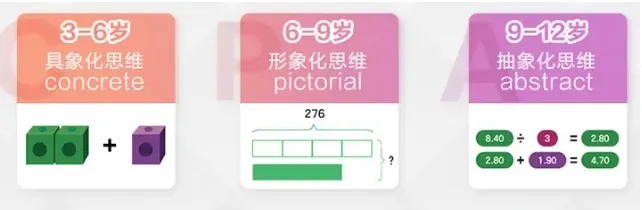
Concrete ⇒ Pictorial ⇒ Abstract
The goal of the SASMO competition is to help students gain proficiency in transforming mathematical problems from concrete to abstract through problem design. This process includes three stages: concreteness, pictorialization, and abstraction, aiming to cultivate students' mathematical thinking abilities. Specifically:
Concrete Stage: Combining professional mathematical teaching aids with instruction to effectively cultivate children's number sense;
Pictorial Stage: Expressing problems through images, preparing for the transition to abstraction;
Abstract Stage: Abstracting complex mathematical problems into simple mathematical diagrams for easier understanding by children.
Note: This website is not the official website. The SASMO Competition Club provides competition information and preparation materials.