
The Geometry Mindset: Seeing Structure, Space, and Symmetry in SASMO Problems

Geometry is one of the oldest and most beautiful branches of mathematics, and it remains a cornerstone of competitions like the Singapore & Asian Schools Math Olympiad (SASMO). Where arithmetic deals with numbers and algebra with symbols, geometry deals with shape, space, and the relationships between them. It asks students to look at a figure and perceive not just what is drawn, but the hidden structure that lies beneath: the equal angles, the parallel lines, the symmetries, and the proportional relationships that turn a confusing picture into a solvable problem.

For many students, geometry is the part of a math olympiad that feels most different from school mathematics. School geometry often emphasizes memorized formulas for area and perimeter, but competition geometry demands something deeper: the ability to reason visually, to add clever helper lines, and to recognize familiar configurations in unfamiliar settings. Developing this geometric mindset is one of the most valuable skills a SASMO competitor can cultivate, and this guide explores the key ideas that make it possible.
推荐

Why Geometry Matters in Math Olympiads

Geometry occupies a unique position in olympiad mathematics because it rewards a kind of thinking that is both logical and creative. A geometry problem presents a student with a diagram and a goal, but the path from one to the other is rarely obvious. Finding that path requires imagination as much as rigor: the willingness to experiment with the figure, to notice what is special about it, and to connect it to known theorems and patterns.

Architectural forms illustrating the geometry that shapes the built world

This blend of intuition and proof is precisely what makes geometry such an effective measure of mathematical ability. In SASMO, geometry problems range from straightforward area calculations to intricate challenges involving circles, angles, and similarity, and success depends far more on insight than on brute computation. Students who learn to think geometrically gain a powerful advantage, because they can often see a solution in a flash of understanding where others would struggle through pages of algebra.

The Power of the Well-Drawn Diagram

One of the simplest yet most transformative habits in geometry is drawing accurate, large, and clear diagrams. A well-drawn figure is not merely a picture; it is a thinking tool that reveals relationships the eye can sense before the mind has proven them. When a diagram is drawn to scale with care, equal lengths look equal, parallel lines look parallel, and special points stand out, giving the student valuable clues about how to proceed.
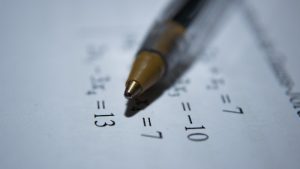
A compass and ruler, the classic tools of geometric construction

The tradition of geometric construction with compass and straightedge reflects a deep truth: that the act of building a figure carefully is itself a form of understanding. Competition geometers often redraw a problem multiple times, each time adding the auxiliary lines and markings that illuminate its structure. Learning to use a diagram actively, marking known information, labeling angles, and experimenting with extra lines, is among the first and most important steps toward geometric fluency.

Triangles: The Foundation of Geometric Reasoning

If geometry has a fundamental building block, it is the triangle. Almost every polygon can be divided into triangles, and a remarkable number of geometric theorems concern the properties of triangles alone. Understanding how angles in a triangle sum to a straight line, how congruent triangles are identified, and how similar triangles relate through proportionality gives a student the essential toolkit for attacking a vast range of problems.
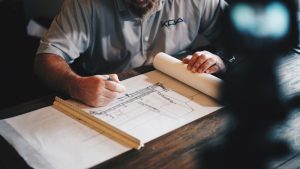
Triangular structures demonstrating the strength and ubiquity of triangles

The triangle is not only mathematically fundamental but structurally remarkable, which is why it appears so often in bridges, roofs, and towers. Its inherent rigidity makes it a symbol of stability, and its mathematical properties make it the starting point for nearly all geometric reasoning. For a SASMO competitor, mastery of triangle congruence and similarity is indispensable, because these ideas recur constantly, often hidden within more complicated figures waiting to be discovered.

推荐

Circles and the Elegance of Symmetry

Few objects in geometry are as rich in structure as the circle. A single circle gives rise to a web of relationships among radii, chords, tangents, and angles, and many of the most elegant olympiad problems involve these relationships. The fact that an angle subtended by a diameter is always a right angle, or that angles standing on the same arc are equal, are examples of the kind of beautiful, dependable facts that circle geometry provides.
Circular symmetry in design, reflecting the perfection of the circle

The circle is also the ultimate symbol of symmetry, with every point on its edge equidistant from its center. This perfect balance makes circles a natural setting for problems involving rotation and equal distances, and it rewards students who learn to exploit the symmetries that circles possess. Becoming comfortable with circle theorems opens the door to some of the most satisfying problems in the entire SASMO syllabus.

Symmetry and Transformations: A Problem-Solver's Shortcut

One of the most powerful ideas in modern geometry is the concept of transformation: moving a figure through reflection, rotation, or translation while preserving its essential properties. Thinking in terms of transformations allows a student to see that two seemingly different parts of a diagram are actually the same shape in different positions, turning a difficult problem into an immediate observation.

A mirror reflection illustrating symmetry and geometric transformation

Symmetry, in particular, is a problem-solver's best friend. Whenever a figure possesses symmetry, that symmetry can be used to reduce work, identify equal quantities, and simplify calculations. Training the eye to spot symmetry, whether in a triangle, a circle, or an irregular polygon, is one of the habits that distinguishes experienced competitors. It transforms geometry from a collection of isolated facts into a unified way of seeing.

Thinking in Three Dimensions

While much of competition geometry takes place in the plane, spatial reasoning extends these ideas into three dimensions. Problems involving cubes, spheres, and other solids ask students to visualize objects from different perspectives, to compute volumes and surface areas, and to understand how three-dimensional shapes are built from two-dimensional faces. This ability to reason about space is a skill that reaches far beyond mathematics into science, engineering, and design.

Three-dimensional polyhedra representing spatial reasoning

Solid geometry challenges the imagination in ways that plane geometry does not, because students must hold a three-dimensional object in their mind and reason about parts of it they cannot directly see. Developing this spatial imagination takes practice, but it is immensely rewarding. Students who can confidently move between a solid object and its flat cross-sections gain access to an entire category of SASMO problems that many of their peers find intimidating.

Geometry in the World Around Us

One of the great appeals of geometry is that it is everywhere. The patterns of a tiled floor, the curves of a leaf, the structure of a honeycomb, and the design of a building are all expressions of geometric principles. Connecting competition geometry to the visible world helps students appreciate that the theorems they study are not abstract curiosities but descriptions of real structure, present all around them.

Abstract geometric patterns found throughout nature and design

This connection between mathematics and the physical world can be a powerful source of motivation. When a student recognizes the geometry of tessellations in bathroom tiles or the symmetry of a snowflake, the subject comes alive in a way that formulas alone never achieve. Encouraging this habit of noticing geometry in everyday life deepens understanding and sustains the curiosity that drives long-term mathematical growth.

Building Geometric Intuition

Geometric intuition is not an innate gift reserved for a fortunate few; it is a skill built through patient, deliberate practice. Students develop it by solving many problems, by studying elegant solutions and understanding why the key ideas work, and by maintaining a personal catalogue of useful theorems and recurring configurations. Over time, the patterns that once seemed obscure become instantly recognizable, and the student begins to anticipate solutions before fully working them out.

The journey toward geometric mastery also benefits from collaboration and reflection. Discussing problems with peers, comparing different approaches to the same figure, and revisiting old problems with fresh eyes all accelerate progress. Geometry, more than most subjects, rewards the student who learns not just to solve a problem but to appreciate the beauty of its solution, and this appreciation is what transforms diligent practice into genuine mathematical insight.

A Window Into Mathematical Beauty

Geometry offers students something that few other subjects can: a direct encounter with mathematical beauty. The elegance of a well-chosen auxiliary line, the surprise of a hidden symmetry, and the satisfaction of a proof that ties everything together give geometry an aesthetic dimension that inspires lifelong learners. For SASMO competitors, mastering geometry is therefore not only a path to higher scores but an invitation to fall in love with mathematics itself.

As students continue to develop their geometric mindset, they carry with them a way of seeing that enriches every area of their mathematical lives. The ability to perceive structure, to reason visually, and to appreciate symmetry serves them in algebra, in number theory, and far beyond the competition hall. Geometry teaches us that mathematics is not merely about computation but about vision, and that learning to see clearly is among the most powerful skills a mind can possess.

推荐

Number Theory Unlocked: The Hidden Patterns Behind Every SASMO Problem

If there is one branch of mathematics that quietly powers more olympiad problems than any other, it is number theory. Often described as the queen of mathematics, number theory is the study of the integers and the surprising structures that emerge from something as simple as counting. From divisibility puzzles and prime number patterns to clock arithmetic and cryptographic codes, the ideas of number theory appear throughout the Singapore & Asian Schools Math Olympiad (SASMO). For students who want to move beyond routine calculation and develop genuine problem-solving power, building a strong foundation in number theory is one of the most rewarding investments they can make.

This guide walks through the essential pillars of number theory that every SASMO competitor should understand, explains why these ideas matter so much in competition settings, and offers a framework for turning abstract properties of numbers into reliable tools for solving difficult problems.

推荐

Why Number Theory Dominates Math Olympiads

Number theory occupies a special place in competitions like SASMO because it requires very little advanced background but rewards deep thinking enormously. A student can understand a number theory problem with only basic arithmetic, yet solving it may demand creativity, careful reasoning, and the ability to spot hidden structure. This combination makes number theory an ideal testing ground for mathematical maturity, which is exactly what olympiads are designed to measure.

A grid of numbers representing the building blocks of number theory

Unlike many areas of school mathematics that rely on memorized procedures, number theory problems rarely surrender to formula-plugging. Instead, they invite students to experiment, look for patterns, test small cases, and build convincing arguments. This is precisely the kind of thinking that separates strong competitors from the rest of the field. When a SASMO question asks about the last digit of a huge power, the remainder when a large number is divided, or whether a certain equation can ever have integer solutions, it is number theory that provides the lens for seeing the answer clearly.

Divisibility and the Building Blocks of Integers

At the heart of number theory lies the concept of divisibility. We say that one integer divides another when it does so with no remainder, and this simple idea opens the door to a rich world of relationships between numbers. Understanding how numbers factor into one another, how common divisors and multiples behave, and how the greatest common divisor and least common multiple connect to each other gives a competitor a powerful vocabulary for describing the structure of the integers.

One of the most useful habits in number theory is to think of numbers not as isolated quantities but as products of their factors. When a problem involves a product of consecutive integers, for example, divisibility reasoning can often reveal that the product must be divisible by certain numbers regardless of which integers are chosen. This kind of structural insight turns seemingly impossible questions into manageable deductions, and it is a skill that appears again and again across SASMO problem sets.

A spiral arrangement of numbers revealing hidden patterns

The famous Ulam spiral, in which the integers are arranged in a spiral and prime numbers are highlighted, offers a striking visual reminder that the whole numbers conceal patterns that are not obvious at first glance. Olympiad number theory is largely the art of uncovering such hidden order, and students who learn to look for it develop an intuition that serves them well far beyond any single competition.

Prime Numbers: The Atoms of Arithmetic

Every integer greater than one can be written as a product of prime numbers in exactly one way, apart from the order of the factors. This remarkable fact, known as the Fundamental Theorem of Arithmetic, means that primes are the indivisible building blocks from which all other whole numbers are constructed. For a competition mathematician, prime factorization is one of the most dependable tools available, because it reduces complicated questions about numbers to questions about their prime components.

Many SASMO problems become far simpler once a student learns to express numbers in terms of their prime factors. Questions about how many divisors a number has, whether a fraction can be simplified, or how powers behave under division often yield quickly to prime factorization. Developing fluency with the smaller primes and comfort with breaking numbers apart into their prime pieces is therefore an essential part of serious competition preparation.

推荐

Modular Arithmetic: The Mathematics of Clocks

Few ideas in number theory are as useful, or as elegant, as modular arithmetic. At its core, modular arithmetic is the mathematics of remainders: instead of tracking a number itself, we track what is left over when it is divided by some fixed value. The familiar clock provides the perfect intuition, since adding hours wraps around after twelve, and four hours after ten o'clock is two o'clock rather than fourteen.

A clock illustrating the wrap-around nature of modular arithmetic

This wrap-around behavior is exactly what makes modular arithmetic so powerful in competitions. Rather than computing enormous numbers directly, a student can work with their remainders, keeping calculations small and manageable. When a SASMO problem asks for the last digit of a number raised to a huge power, it is really asking for a remainder modulo ten, and modular arithmetic provides a clean, systematic path to the answer. Mastering this perspective transforms intimidating questions about massive quantities into routine exercises in pattern recognition.

The Power of Remainders in Competition Problems

Reasoning with remainders goes hand in hand with one of the most dependable strategies in all of mathematics: considering cases. Because any integer leaves only a limited set of possible remainders when divided by a given number, a student can often resolve a difficult problem by examining each possibility in turn. This technique is especially effective for proving that certain equations have no solutions, since showing that no remainder can satisfy the required condition settles the question completely.

Parity, the distinction between even and odd numbers, is the simplest and most frequently used example of remainder reasoning, corresponding to arithmetic modulo two. A surprising number of olympiad problems can be cracked simply by asking whether the quantities involved are even or odd and tracking how that property changes through a sequence of operations. As students grow more comfortable with remainders modulo three, four, and beyond, they gain an increasingly flexible toolkit for cutting through complexity and reaching the heart of a problem.

From Theory to Practice: Classic SASMO-Style Challenges

The true value of number theory becomes clear when students apply it to realistic competition challenges. Consider the task of finding the last digit of a large power, determining how many positive integers divide a given number, or deciding whether a particular total can be formed from a set of allowed moves. Each of these common SASMO-style questions has a natural number theory solution, and recognizing which tool to deploy is a skill built through deliberate practice.

Dice representing the counting and combinatorial side of number theory

Number theory also blends naturally with counting and probability, another area where SASMO places considerable emphasis. Questions about how many outcomes satisfy a divisibility condition, or how likely a randomly chosen number is to have a certain property, sit at the intersection of these two fields. Students who can move fluidly between counting arguments and number-theoretic reasoning are equipped to handle a broad spectrum of problems, and this versatility is a hallmark of top performers in any math olympiad.

Cryptography: Where Number Theory Meets the Real World

Number theory is far more than an abstract game; it underpins much of modern digital security. The encryption that protects online banking, private messages, and secure websites relies heavily on the difficulty of factoring very large numbers into their prime components. The fact that multiplying two large primes is easy while reversing the process is extraordinarily hard is precisely what keeps cryptographic systems safe, and this beautiful connection between pure mathematics and everyday technology makes number theory one of the most relevant subjects a student can study.

A lock symbolizing the cryptographic applications of number theory

Sharing this real-world dimension with students does more than satisfy their curiosity; it shows them that the patterns they explore in competition problems have profound consequences. The same divisibility ideas and prime number properties that help solve a SASMO question also help secure the information flowing across the internet, and appreciating that link can deepen a student's motivation and sense of wonder.

Binary and Digital Number Systems

The integers can be represented in many different bases, and the binary system, which uses only the digits zero and one, is the language of every computer. Understanding how numbers are expressed in bases other than ten is a natural extension of number theory, and it frequently appears in competition problems that ask students to convert between representations, reason about digit sums, or analyze how numbers behave under different place-value systems.

Streams of binary digits illustrating number representations beyond base ten

Working with alternative bases sharpens a student's understanding of what a number truly is, separating the abstract quantity from the particular symbols used to write it. This deeper perspective pays dividends throughout mathematics, because students who grasp the underlying structure of number representations can adapt quickly to unfamiliar problems rather than relying on memorized routines tied to base ten alone.

Building Your Number Theory Toolkit

Developing strength in number theory is a gradual process, but it follows a reliable path. Students should begin by becoming completely comfortable with divisibility, factors, and prime factorization, then move on to modular arithmetic and remainder reasoning, and finally practice applying these tools to a wide variety of problems. The key is active engagement: number theory is learned by doing, by testing small cases, by making conjectures, and by working to prove them rigorously.

Abstract patterns representing the creative side of number theory

Keeping a notebook of useful techniques, memorable examples, and recurring problem types accelerates this process considerably. Over time, patterns that once seemed mysterious become familiar, and the student builds the confident intuition that characterizes strong olympiad mathematicians. Each solved problem adds another tool to the toolkit, and each tool makes the next problem more accessible.

A Foundation for Mathematical Growth

Number theory is much more than a collection of competition tricks; it is a way of thinking about structure, pattern, and proof that enriches every area of mathematics. For SASMO competitors, it offers an unmatched combination of accessibility and depth, welcoming beginners with simple questions while rewarding dedicated students with profound insights. The integers, humble as they may seem, conceal a universe of beauty and surprise, and learning to explore that universe is one of the great joys of studying mathematics.

As students continue their SASMO journey, the number theory skills they develop will serve them not only in this competition but throughout their mathematical lives. From the primes that secure our digital world to the remainders that unlock seemingly impossible problems, number theory proves again and again that the simplest objects in mathematics can lead to the most extraordinary discoveries. Embracing this subject is not just a step toward olympiad success; it is an invitation to see the hidden order behind the numbers that shape our world.

推荐
Online Customer Service
Contact Customer Service