
Thinking in Symbols: An Algebraic Thinking Guide for SASMO Competitors

Algebra is often described as the language of mathematics, and for good reason. Where arithmetic works with specific numbers, algebra works with symbols that stand for numbers, allowing us to describe relationships, patterns, and rules in a general and powerful way. This ability to think abstractly, to represent the unknown with a letter and to manipulate expressions according to precise rules, is one of the most important skills a young mathematician can develop, and it plays a central role in the Singapore & Asian Schools Math Olympiad (SASMO).

For many students, the transition from arithmetic to algebra is a genuine leap, requiring a new way of thinking about quantities. But for those who make that leap, algebra becomes an extraordinarily versatile tool, capable of untangling problems that would be nearly impossible to solve by calculation alone. This guide explores the essential ideas of algebraic thinking, explains why they are so valuable in competition settings, and offers a framework for building the fluency that strong SASMO competitors rely on.

推荐

Why Algebra Matters in Math Olympiads

Algebra occupies a central place in olympiad mathematics because it provides a universal language for expressing and solving problems. Whether a question involves finding an unknown quantity, analyzing a sequence, or proving an inequality, algebra offers a systematic way to translate the situation into mathematical form and work toward a solution. This translation from words to symbols, and back again, is one of the most fundamental skills in all of mathematics.

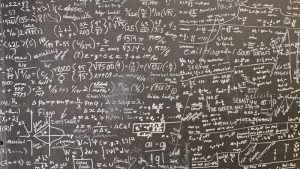
Equations written on a blackboard, the classic setting for algebraic reasoning

In SASMO, algebraic thinking appears throughout the paper, from straightforward problems about unknown values to more sophisticated challenges involving patterns, relationships, and optimization. Students who are comfortable manipulating algebraic expressions and setting up equations gain a decisive advantage, because they can approach a wide range of problems with a single, coherent toolkit. Algebra is not just one topic among many; it is a way of thinking that connects and strengthens every other area of mathematics.

The Power of the Unknown: Variables and Equations

At the heart of algebra lies the concept of the variable, a symbol that represents a quantity we do not yet know. The introduction of variables transforms mathematics from a subject about specific numbers into a subject about relationships, allowing us to describe entire families of problems at once. When a student learns to assign a variable to an unknown and to build an equation that captures the conditions of a problem, they unlock one of the most powerful techniques in mathematics.
Variables and equations written on paper

Solving equations is then the process of discovering what the variable must be, using a sequence of logical steps that preserve the balance of the relationship. This idea of balance, where whatever is done to one side must be done to the other, is both intuitive and profound, and it underlies everything from simple linear equations to complex systems. Mastering the art of setting up and solving equations is the foundation upon which all further algebraic skill is built.

Seeing Structure: The Art of Manipulation

Algebra is not merely about solving equations; it is about seeing and revealing structure. A skilled algebraist looks at an expression and perceives the patterns within it: the common factors that can be pulled out, the products that can be expanded or condensed, and the substitutions that can simplify the whole. This ability to manipulate expressions fluently is what allows complicated problems to be reduced to manageable form.

Mathematical symbols and structure on a board

Techniques such as factoring, expanding, completing the square, and recognizing special identities give students a rich vocabulary for working with expressions. In competition settings, the difference between a long, laborious solution and an elegant one often lies in whether the student can see the hidden structure of an expression. Developing this structural vision takes practice, but it is one of the most rewarding skills in mathematics, because it turns complexity into clarity.

Sequences and Patterns: The Language of Growth

One of the most beautiful applications of algebra is the study of sequences and patterns. A sequence is an ordered list of numbers that follows a rule, and algebra provides the tools to describe that rule precisely, to predict future terms, and to find sums of many terms at once. From arithmetic sequences that grow by a fixed amount to geometric sequences that multiply by a fixed ratio, these patterns appear everywhere in mathematics and in the world around us.

A growth chart illustrating sequences and patterns over time

Pattern recognition is one of the most frequently tested skills in SASMO, because it captures the essence of mathematical thinking: observing specific cases, detecting the underlying rule, and expressing it in general form. Students who become adept at analyzing sequences develop an eye for regularity that serves them across every branch of mathematics. Learning to see the rule behind the pattern is not just a competition skill; it is a way of understanding how things grow and change.

推荐

Functions: Relationships Between Quantities

The concept of a function is one of the most important ideas in all of mathematics. A function describes a relationship in which one quantity depends on another, providing a way to model how changes in one value affect another. Whether describing the height of a thrown ball, the cost of items purchased, or the output of a mathematical rule, functions give us a precise language for talking about dependence and change.

Abstract curves representing the graphs of functions

In competitions, functions often appear in problems about inputs and outputs, about how a process transforms one number into another, or about finding values that satisfy certain conditions. Students who understand the idea of a function can approach these problems with confidence, reasoning about relationships rather than just isolated numbers. This perspective is a hallmark of advanced mathematical thinking and a valuable asset for any SASMO competitor.

Inequalities: Comparing Quantities with Precision

While equations state that two quantities are equal, inequalities describe situations where one quantity is greater or less than another, and they are an essential part of algebraic reasoning. Many olympiad problems ask students to determine a range of possible values, to find a maximum or minimum, or to prove that one expression always exceeds another. These questions rely on the ability to work confidently with inequalities and to understand how they behave under various operations.
Mathematical formulas and inequalities recorded in a notebook

The study of inequalities also introduces students to some of the most elegant ideas in mathematics, including famous results that relate different quantities in surprising ways. Learning to reason with inequalities sharpens a student's ability to estimate, to bound, and to compare, skills that are indispensable in both competition and higher mathematics. As students grow comfortable with this area, they gain a more complete and nuanced understanding of how quantities relate to one another.

Building Algebraic Fluency

Developing strength in algebra is a gradual process that rewards consistent, deliberate practice. Students should begin by mastering the fundamentals of variables, equations, and basic manipulation, then progress to sequences, functions, and inequalities. The key is to build not just mechanical skill but genuine understanding, asking why each technique works and how it connects to the others. Over time, the operations that once required careful thought become automatic, freeing the mind to focus on strategy and insight.

Abstract patterns representing the elegance of algebraic structure

Keeping a notebook of useful identities, recurring problem types, and memorable techniques accelerates this growth considerably. Algebra, more than most subjects, rewards the student who organizes their knowledge and revisits it regularly. As fluency builds, students discover that algebra is not a collection of arbitrary rules but a coherent and beautiful system, one that becomes more intuitive and more enjoyable with every problem solved.

A Foundation for All Future Mathematics

Algebra is far more than a competition topic; it is the gateway to nearly all advanced mathematics. The skills of symbolic reasoning, of manipulating expressions, and of thinking about relationships between quantities are the foundation upon which calculus, linear algebra, and countless other fields are built. For SASMO competitors, mastering algebra is therefore not just a path to a better score but an investment in their entire mathematical future.

As students continue to develop their algebraic thinking, they carry with them a way of reasoning that enriches every area of their studies. The ability to represent the unknown, to see structure, and to work systematically toward a solution is a skill that extends far beyond mathematics into every domain that values clear and logical thought. Learning to think in symbols is, in a very real sense, learning to think more powerfully, and that is a gift that lasts a lifetime.

推荐

The Art of Counting: A Combinatorics Guide for SASMO Competitors

How many ways can a committee be chosen? How many paths cross a grid? How many arrangements of letters spell something new? These deceptively simple questions lie at the heart of combinatorics, the mathematics of counting, arrangement, and possibility. Alongside number theory and geometry, combinatorics forms one of the great pillars of olympiad mathematics, and it features prominently in the Singapore & Asian Schools Math Olympiad (SASMO). What makes combinatorics so captivating is that its questions are easy to state yet often surprisingly subtle to answer, demanding not heavy machinery but clear, structured thinking.

For students preparing for SASMO, combinatorics offers a special kind of reward. Unlike areas that depend on advanced formulas, combinatorial problems can be approached with little more than logic and organization, yet they quickly lead to deep and beautiful ideas. This guide introduces the essential concepts of combinatorics, explains why they matter so much in competition settings, and offers a framework for developing the disciplined counting mindset that strong mathematicians rely on.

推荐

Why Combinatorics Captures the Olympiad Spirit

Combinatorics embodies the essence of mathematical problem-solving because it strips away computation and focuses on structure. A combinatorics problem asks a student to count the number of possibilities in a situation, and doing so well requires the ability to organize information, to avoid double-counting, and to see the underlying pattern that makes a problem tractable. These are precisely the habits of mind that olympiads are designed to cultivate and assess.

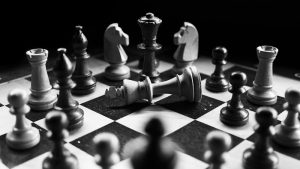
Chess pieces arranged on a board, a classic setting for counting problems

The chessboard has long been a favorite playground for combinatorial thinking, inspiring famous puzzles about how many ways pieces can be placed without attacking one another. Such problems illustrate a central theme of the subject: that counting is rarely about brute enumeration. Instead, it is about finding a clever perspective that transforms an overwhelming number of cases into a manageable and elegant calculation, a skill that lies at the very core of SASMO success.

The Fundamental Principle of Counting

Every branch of combinatorics rests on one foundational idea, often called the multiplication principle: if one choice can be made in a certain number of ways and a second independent choice can be made in another number of ways, then the total number of combined choices is the product of the two. This simple rule is the engine behind an enormous range of counting problems, from determining the number of possible outfits to calculating the arrangements of objects in a sequence.

Playing cards, a familiar tool for exploring combinations and chance

A deck of playing cards provides an intuitive example, since the number of possible hands one can be dealt follows directly from careful application of the counting principles. Once students internalize the multiplication principle and its companion, the addition principle for separate cases, they possess the basic tools to approach a remarkable variety of problems. Mastery of these foundations is the first and most important step in building genuine combinatorial confidence.

Permutations and Combinations: When Order Matters

Two of the most important ideas in combinatorics are permutations and combinations, and the distinction between them hinges on a single question: does order matter? A permutation is an arrangement in which the sequence of objects is significant, while a combination is a selection in which only the chosen objects matter, regardless of their order. Recognizing which situation a problem describes is often the key to solving it correctly.

This distinction trips up many students, but with practice it becomes second nature. Choosing the members of a team is a combination, because the order in which they are picked is irrelevant, while assigning them to distinct roles such as captain and secretary is a permutation, because the positions are different. Developing the habit of pausing to ask whether order matters saves countless errors and leads directly to the correct counting formula, making this one of the most valuable instincts a SASMO competitor can build.

Counting Without Listing: The Power of Systematic Thinking

The hallmark of an experienced combinatorial thinker is the ability to count without listing every possibility. When a problem involves hundreds or thousands of arrangements, writing them all down is impossible, so the mathematician must find a structural shortcut. Techniques such as counting by cases, using complementary counting to find what is not wanted and subtracting from the total, and identifying symmetry all allow complex counts to be performed efficiently and reliably.

A grid structure suggesting paths and lattice-counting problems

Counting paths on a grid is a classic illustration of this systematic approach. Rather than tracing every route, a skilled student recognizes that each path corresponds to a sequence of steps, reducing the problem to a clean combinatorial calculation. This ability to reframe a messy counting task as an organized mathematical structure is what separates competent problem-solvers from exceptional ones, and it is a skill honed through deliberate and varied practice.

推荐

Graph Theory and the Mathematics of Connections

Closely related to combinatorics is graph theory, the study of networks made of points connected by lines. Graphs provide a powerful language for describing relationships, whether between cities joined by roads, people linked by friendships, or web pages connected by hyperlinks. Many olympiad problems that appear to be about arrangements or routes are, at their core, questions about the structure of a graph, and learning to see them this way opens up elegant solution strategies.

A network of interconnected nodes illustrating graph theory

The ideas of graph theory also connect naturally to some of the most famous problems in mathematics, from the bridges of historical puzzle cities to the coloring of maps. For a SASMO competitor, even a basic familiarity with graphs, including concepts like paths, cycles, and degrees of connection, provides a versatile toolkit. The ability to model a problem as a network and then reason about its structure is a sophisticated skill that can make seemingly intractable questions surprisingly approachable.

The Pigeonhole Principle: Simple Yet Profound

Among the most delightful tools in combinatorics is the pigeonhole principle, which states that if more objects are placed into fewer containers, then at least one container must hold more than one object. Despite its almost obvious simplicity, this principle is astonishingly powerful, providing elegant proofs of results that would otherwise seem difficult to establish. It is a favorite of olympiad problem-setters precisely because it rewards students who can recognize when to apply it.

Puzzle pieces representing the fitting together of combinatorial arguments

Classic applications of the pigeonhole principle include showing that among a group of people, two must share the same number of friends, or that certain patterns must inevitably appear in a sufficiently large collection. Learning to identify the hidden pigeonholes in a problem, the objects and the containers, is a skill that brings genuine mathematical insight. It teaches students that sometimes the most powerful arguments are not the most complicated, but the most clearly seen.

Combinatorics in Collaboration and Real Life

Combinatorics is far from an abstract exercise; it underpins much of the modern world. Computer science relies on combinatorial reasoning to analyze algorithms and count possibilities, probability theory is built upon combinatorial foundations, and fields from genetics to logistics depend on the ability to organize and count complex arrangements. Understanding combinatorics therefore equips students with tools that reach well beyond the competition hall.

A collaborative group, evoking the many ways people can be organized

Even everyday decisions involve combinatorial thinking, from scheduling and organizing to evaluating chances and choices. When students recognize that the same principles governing a SASMO problem also govern the arrangement of a tournament bracket or the design of a secure password, the subject takes on new meaning. This connection between abstract counting and practical life can inspire a deeper and more lasting engagement with mathematics.

Building Combinatorial Fluency

Developing strength in combinatorics comes from practicing the art of careful, organized thinking. Students should work through a wide variety of counting problems, paying close attention to whether order matters, to how cases are divided, and to whether a clever principle like complementary counting or the pigeonhole principle applies. Keeping a record of useful techniques and revisiting challenging problems helps consolidate these ideas into reliable instincts.

Abstract connections representing the linked ideas of combinatorics

Perhaps most importantly, combinatorics rewards patience and clarity of thought. The best combinatorial solutions are not the longest but the most transparent, revealing a structure that makes the answer almost inevitable. As students cultivate this clarity, they develop a way of thinking that illuminates not only counting problems but mathematics as a whole, training the mind to seek order within apparent complexity.

A Gateway to Mathematical Maturity

Combinatorics is, at its heart, the mathematics of structure and possibility. It teaches students to look at a jumble of options and perceive the patterns that organize them, to count with precision and elegance, and to prove surprising truths with simple, beautiful arguments. For SASMO competitors, mastering combinatorics is not merely a route to more points; it is a path toward genuine mathematical maturity and a deeper appreciation of how mathematics makes sense of the world.

As students continue to explore this vibrant field, the skills they build will serve them across every area of mathematics and far into their future studies. The disciplined counting mindset, the eye for structure, and the love of elegant argument that combinatorics fosters are gifts that last a lifetime. In learning to count well, students learn something far more valuable: how to think clearly, creatively, and with confidence in the face of complexity.

推荐
Online Customer Service
Contact Customer Service