
Mathematics and art are often seen as opposites, one coldly logical and the other warmly expressive. Yet this division is a modern illusion. Throughout history, the greatest artists and the greatest mathematicians have been drawn to the same deep truth: that beauty has structure, and that structure can be beautiful. From the golden ratio of ancient Greece to the fractal landscapes of computer graphics, mathematics and art have always been intertwined, each enriching the other in ways that delight the mind and stir the soul.
For students preparing for the Singapore & Asian Schools Math Olympiad (SASMO), exploring the connection between mathematics and art offers something special. It reveals that mathematics is not merely a toolkit for solving problems but a language for describing the patterns that make the world beautiful. It shows that creativity and logic are not opposites but partners, and that the most elegant solutions often come from the same aesthetic sense that guides a painter or a composer. This guide explores the rich intersection of mathematics and art, from ancient proportions to modern visual wonders.

The Golden Ratio: Nature's Proportion
Few mathematical ideas have captured the imagination of artists and architects as powerfully as the golden ratio, a special proportion approximately equal to one point six one eight. When a line is divided into two parts so that the ratio of the whole to the larger part equals the ratio of the larger to the smaller, the result is a proportion that the human eye finds remarkably pleasing. This ratio appears in the design of ancient buildings, in the composition of Renaissance paintings, and in the spiral patterns of shells and flowers.
The golden ratio has been used by artists throughout history to create compositions that feel balanced and harmonious. From the Parthenon in Athens to the works of Leonardo da Vinci, the golden ratio has been a secret ingredient of visual beauty. For a mathematics student, understanding the golden ratio means understanding not just a number but a principle that connects geometry, nature, and art in a single, elegant idea. It is a reminder that the universe speaks in mathematics, and that beauty is one of the things it is saying.
Fractals: The Geometry of Complexity
Fractals are one of the most exciting discoveries in modern mathematics, and they reveal a geometry far richer than the simple shapes of classical geometry. A fractal is a pattern that repeats itself at every scale, so that zooming in on a small part reveals the same structure as the whole. This property, called self-similarity, produces shapes of breathtaking complexity and beauty, shapes that resemble coastlines, clouds, mountains, and the branching of trees.

Fractal geometry has transformed not only mathematics but also art, because it allows artists to create images of astonishing richness using simple rules. Computer-generated fractal art has become a genre of its own, producing landscapes that are at once surreal and strangely natural. For students, fractals are a doorway into a kind of mathematics that is visual, creative, and endlessly surprising. They show that complexity does not require complicated rules, just simple rules applied repeatedly, and this insight is as profound as it is beautiful.
Symmetry: The Mathematics of Balance
Symmetry is one of the most fundamental concepts in both mathematics and art. In mathematics, symmetry is a precise idea involving transformations that leave an object unchanged. In art, symmetry is a source of visual harmony, creating a sense of balance and order that the human mind finds instinctively pleasing. From the bilateral symmetry of a face to the rotational symmetry of a rose window, symmetry is everywhere in the world of beauty.
The study of symmetry leads naturally to group theory, one of the most elegant branches of modern mathematics, but it also leads to an appreciation of the patterns that surround us in nature and art. A student who learns to see symmetry sees the world differently, noticing the mathematical structure in everything from a butterfly's wings to the arches of a cathedral. Symmetry is the mathematics of balance, and it is one of the most direct connections between the beauty of numbers and the beauty of forms.
Mathematics in Music
Music is mathematics made audible. The intervals between notes, the rhythms of a measure, and the structure of a composition are all governed by mathematical relationships. The ancient Greeks discovered that pleasing musical intervals correspond to simple ratios of frequencies, and this insight has shaped Western music ever since. A scale, a chord, and a symphony are all built on mathematical foundations, and the greatest composers have often been deeply aware of the mathematical structure of their art.
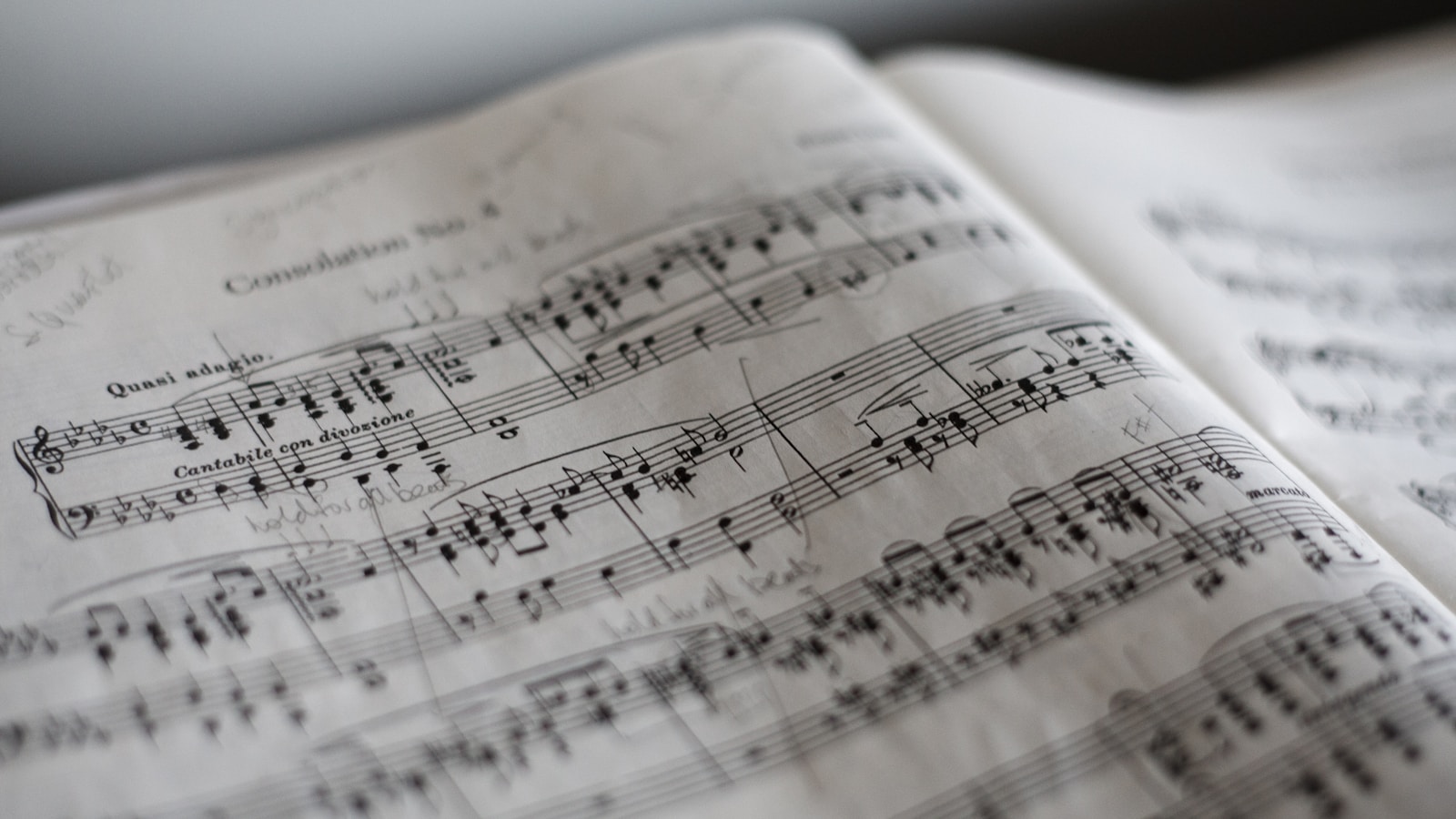
For students who love music, understanding its mathematical basis can deepen their appreciation of both subjects. The patterns of repetition and variation in a piece of music, the harmonic relationships that create tension and resolution, and the rhythmic structures that give a composition its pulse are all expressions of mathematical ideas. Mathematics and music speak the same language, the language of pattern, and learning to hear that language is one of the great pleasures of studying both.
Perspective: The Geometry of Seeing
The invention of linear perspective in the Renaissance was one of the great triumphs of mathematical art. By understanding how parallel lines appear to converge at a vanishing point on the horizon, artists learned to create paintings that convincingly depict three-dimensional space on a two-dimensional surface. This technique, which is entirely based on geometry, transformed Western art and remains a fundamental tool of visual representation.
Perspective is a perfect example of how mathematics can serve art, providing a technical foundation that artists can use to achieve their creative goals. The geometry of perspective is elegant in its own right, involving similar triangles, proportional reasoning, and coordinate geometry, and it shows how a deep understanding of mathematical principles can lead to practical mastery. For a student, learning perspective is a way to experience firsthand how mathematics makes art possible.
Tessellation: The Art of Repetition
A tessellation is a pattern of shapes that fit together perfectly to cover a surface without gaps or overlaps, like the tiles of a floor or the cells of a honeycomb. The mathematics of tessellation is a rich field that explores which shapes can tile a plane, how they can be arranged, and what symmetries the resulting patterns possess. The artist M.C. Escher made tessellation famous with his intricate, playful designs that transform one shape into another.
Tessellation is a wonderful example of how mathematical constraints can inspire creativity rather than limit it. The rules of tessellation are strict, but the possibilities they open up are endless, and artists and mathematicians alike have explored them with delight. For students, creating tessellations is a hands-on way to engage with geometry, symmetry, and pattern, and it is a reminder that mathematics is as much about creation as it is about calculation.
The Creative Side of Mathematics
Perhaps the most important lesson of the connection between mathematics and art is that mathematics itself is a creative discipline. The mathematician, like the artist, seeks elegance, beauty, and insight. A beautiful proof, a clever construction, or an unexpected connection is a work of creativity, and the satisfaction of discovering one is akin to the satisfaction of completing a painting or a piece of music.
This creative dimension of mathematics is often overlooked in school, where the subject can seem like a collection of rules to be memorized. But for those who go deeper, mathematics reveals itself as a playground of the imagination, a place where ideas can be explored, combined, and transformed into something new. Embracing this creative side is one of the best ways to sustain motivation and joy in mathematical study, and it is a perspective that enriches every area of a student's work.
Beauty in Numbers, Structure in Art
Mathematics and art are not separate worlds but two faces of the same human impulse: the desire to understand, to create, and to find meaning in pattern and form. The golden ratio, the symmetry of a snowflake, the rhythm of a song, and the perspective of a painting are all expressions of the same underlying order, an order that mathematics describes and art celebrates.
As SASMO competitors continue their mathematical education, the connection between mathematics and art can serve as a source of inspiration and a reminder that the beauty they find in a well-solved problem is the same beauty that moves us in a great work of art. Mathematics is not just a tool for passing exams; it is a way of seeing the world, and when we look through its lens, we discover that the world is more beautiful than we ever imagined.