

Some students can carry out long calculations correctly but struggle to tell whether their answer makes sense, while others seem to have an instinctive feel for numbers, quickly sensing what is reasonable and what is not. This difference is largely a matter of number sense, the intuitive understanding of numbers, their magnitudes, and their relationships that allows a person to reason flexibly and judge results with confidence. Number sense is one of the most valuable yet often overlooked qualities in mathematics, and it plays an important role in the Singapore & Asian Schools Math Olympiad (SASMO).
Unlike specific procedures that can be memorized, number sense is a way of relating to numbers. It is what lets a student estimate a total before calculating it exactly, recognize when an answer is clearly wrong, and choose the most efficient path through a problem. For SASMO competitors, strong number sense is a quiet superpower, saving time, preventing errors, and opening up elegant shortcuts. This guide explores what number sense is, why it matters, and how students can develop it.

What Is Number Sense?
Number sense is best described as a feel for numbers, an intuition that helps a person understand, compare, and manipulate quantities without always relying on formal procedures. A student with good number sense knows that forty-eight times fifty-two is close to two thousand five hundred, because they recognize it as nearly fifty times fifty. They understand that dividing by a number less than one makes a result larger, and they can break numbers apart and recombine them in flexible ways to make calculations easier.
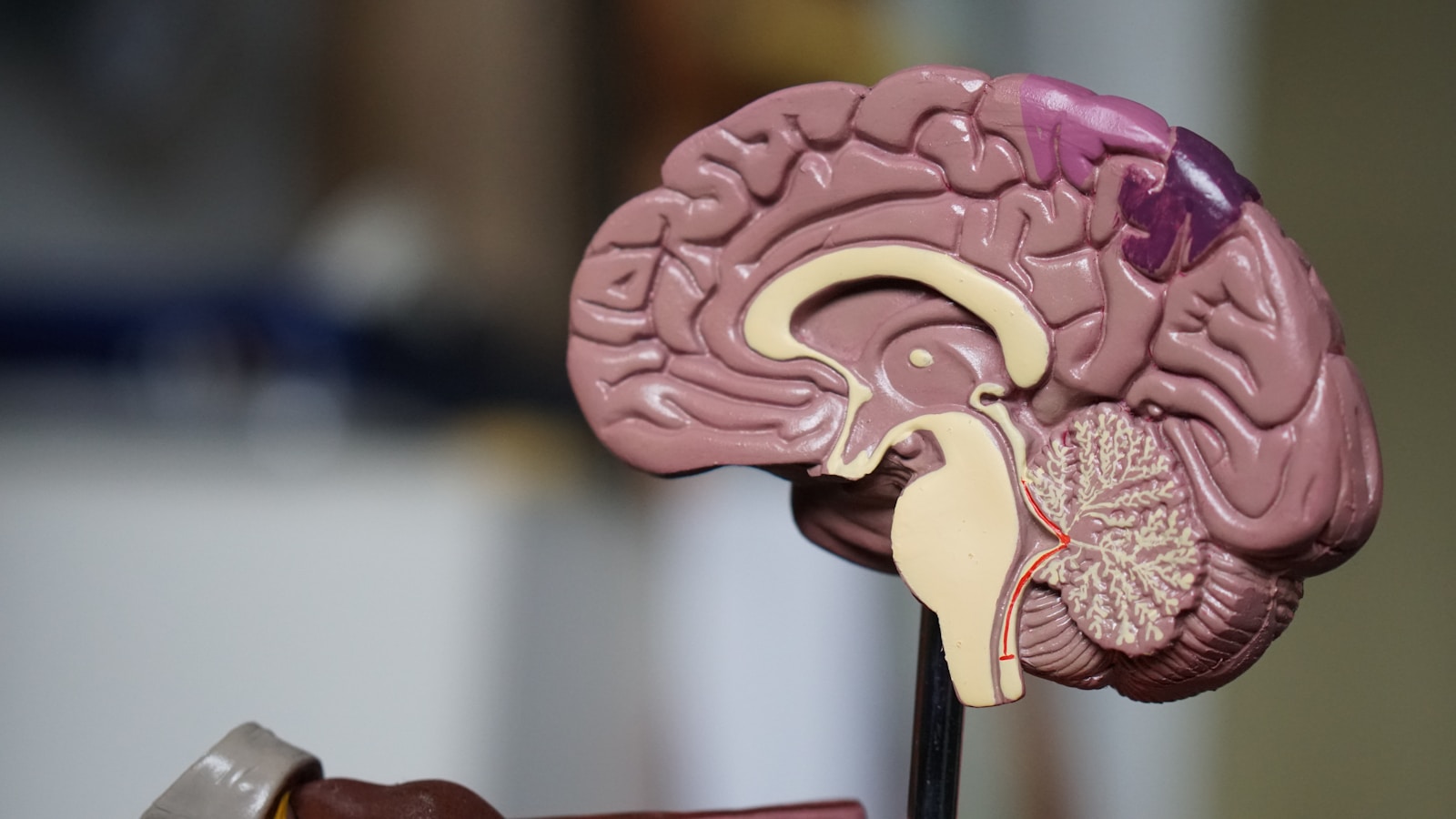
This kind of thinking is sometimes called mental agility, and it reflects a deep familiarity with how numbers behave. Rather than seeing numbers as rigid symbols to be processed by rules, a student with number sense sees them as flexible quantities that can be rearranged, approximated, and understood from multiple angles. Developing this flexibility is one of the most practical ways to become faster and more confident in mathematics.
Estimation: The Skill of Smart Approximation
At the heart of number sense lies estimation, the ability to find a good approximation without calculating exactly. Estimation is not about being sloppy; it is about understanding a situation well enough to produce a useful answer quickly. Whether judging the cost of a shopping trip, the time needed for a journey, or the size of a result, estimation is a skill that is used constantly in both mathematics and everyday life.

In competition settings, estimation is a powerful tool for checking work and guiding reasoning. Before diving into a complicated calculation, a student who first estimates the expected answer has a target to aim for and a way to catch mistakes. If the final result is far from the estimate, something has gone wrong, and the student knows to look for an error. This habit of estimating before and after calculating is one of the simplest and most effective ways to improve accuracy.
Number Sense in Everyday Life
Number sense is not just a mathematical skill; it is a life skill that appears in countless everyday situations. From comparing prices at the store to judging how much food is needed for a group of people, the ability to reason about quantities quickly and accurately is constantly in demand. Students who develop strong number sense find that they are better equipped to handle these practical situations with confidence.

Shopping provides a familiar example, since deciding whether a deal is genuinely good requires comparing quantities and prices mentally. A student with good number sense can quickly determine that a larger package is not always the better value, or that a twenty-five percent discount is the same as paying three-quarters of the original price. These everyday applications show that number sense is not an abstract academic skill but a practical tool that makes daily decisions easier and smarter.
Magnitude and Scale: Grasping Big and Small
An important part of number sense is the ability to grasp magnitude, to understand the scale of numbers both large and small. Many people struggle to appreciate the difference between a million and a billion, or to make sense of very small quantities, yet these distinctions matter enormously in science, finance, and public discourse. A strong sense of magnitude helps students navigate these ideas with clarity rather than confusion.

The universe itself offers a striking lesson in scale, from the tiny particles of matter to the immense distances between stars. Developing comfort with orders of magnitude allows students to reason about such vast ranges and to recognize when a claim about a very large or very small number is plausible or absurd. This ability to judge scale is a valuable part of mathematical literacy and a natural extension of number sense.
Counting and Quantities: Making Sense of Amounts
Number sense also involves a practical understanding of quantities, the ability to look at a collection of objects and make sense of how many there are, how they are grouped, and how they relate to one another. This skill goes beyond rote counting; it includes the ability to estimate amounts, to group objects for easier counting, and to understand relationships like more than, less than, and about the same as.

A market stall full of goods offers a vivid picture of quantities waiting to be understood and compared. The ability to make quick, sensible judgments about amounts is useful not only in mathematics but in any situation that involves managing resources. For students, strengthening this aspect of number sense means becoming more comfortable with numbers in all their forms, whether they appear in equations, tables, or the real world.
Approximation and Checking Answers
One of the most valuable applications of number sense is checking whether an answer is reasonable. After solving a problem, a student with strong number sense can step back and ask whether the result makes sense given the situation. If a problem about the height of a person produces an answer of fifteen meters, number sense immediately signals that something has gone wrong, prompting a review of the work.

This checking process is much like aiming at a target: even before knowing the exact answer, a student can tell whether they are in the right region. This skill is especially valuable in timed competitions like SASMO, where a quick sanity check can catch errors before they cost points. Learning to pause and ask whether an answer is reasonable is a simple habit that pays enormous dividends in accuracy and confidence.
Building Number Sense for Competition Success
Number sense is not an innate gift but a skill that grows through deliberate practice. Students can develop it by regularly estimating before calculating, by looking for flexible ways to compute, by playing with numbers, and by reflecting on whether their answers make sense. Over time, these habits build an intuition that makes mathematical thinking faster, more accurate, and more enjoyable.

In the context of SASMO preparation, number sense complements every other skill a student develops. It makes arithmetic faster, helps with algebraic manipulation, supports reasoning in geometry and probability, and provides a constant check against errors. Students who invest in building this intuition find that it strengthens their performance across the entire competition, making it one of the most worthwhile foundations for mathematical success.
A Foundation That Lasts a Lifetime
Number sense is more than a competition advantage; it is a way of engaging with the numerical world that lasts a lifetime. The ability to estimate, to judge scale, to reason flexibly about quantities, and to recognize when something is off serves students in their studies, their careers, and their daily decisions. It transforms numbers from intimidating symbols into familiar tools that can be handled with confidence.
As SASMO competitors continue their mathematical journey, the number sense they develop will quietly support every other skill they learn. It is the intuition that tells them their answer is reasonable, the flexibility that reveals a clever shortcut, and the confidence that comes from truly understanding numbers. In cultivating number sense, students gain not just better scores but a deeper and more comfortable relationship with mathematics itself.