

Mathematics is often taught as a finished product, a set of rules and theorems to be learned and applied. But behind every formula and every proof lies a story, a human story of curiosity, struggle, and discovery. The history of mathematics is the story of how people across thousands of years and dozens of cultures grappled with the deepest questions of number, shape, and pattern, and in doing so built the magnificent edifice of knowledge that students inherit today. For those preparing for the Singapore & Asian Schools Math Olympiad (SASMO), understanding some of this history can be a source of inspiration, perspective, and a deeper appreciation for the subject they are studying.
When students learn that the concept of zero was a revolutionary idea, that geometry was born from the need to measure land, or that the algebra they use today was developed over centuries by scholars in many lands, mathematics becomes more than a collection of techniques. It becomes a human achievement, one of the great intellectual adventures of our species. This guide explores some of the key moments in the history of mathematics and the lessons they offer for young mathematicians today.

The Ancient Roots of Mathematics
Mathematics is among the oldest of human intellectual activities. Long before written language, people counted, measured, and recognized patterns. The earliest evidence of mathematical thinking dates back tens of thousands of years, to tally marks on bones and the arrangement of stones in patterns that suggest an awareness of numbers and shapes. These early steps were the foundation upon which all later mathematics was built.
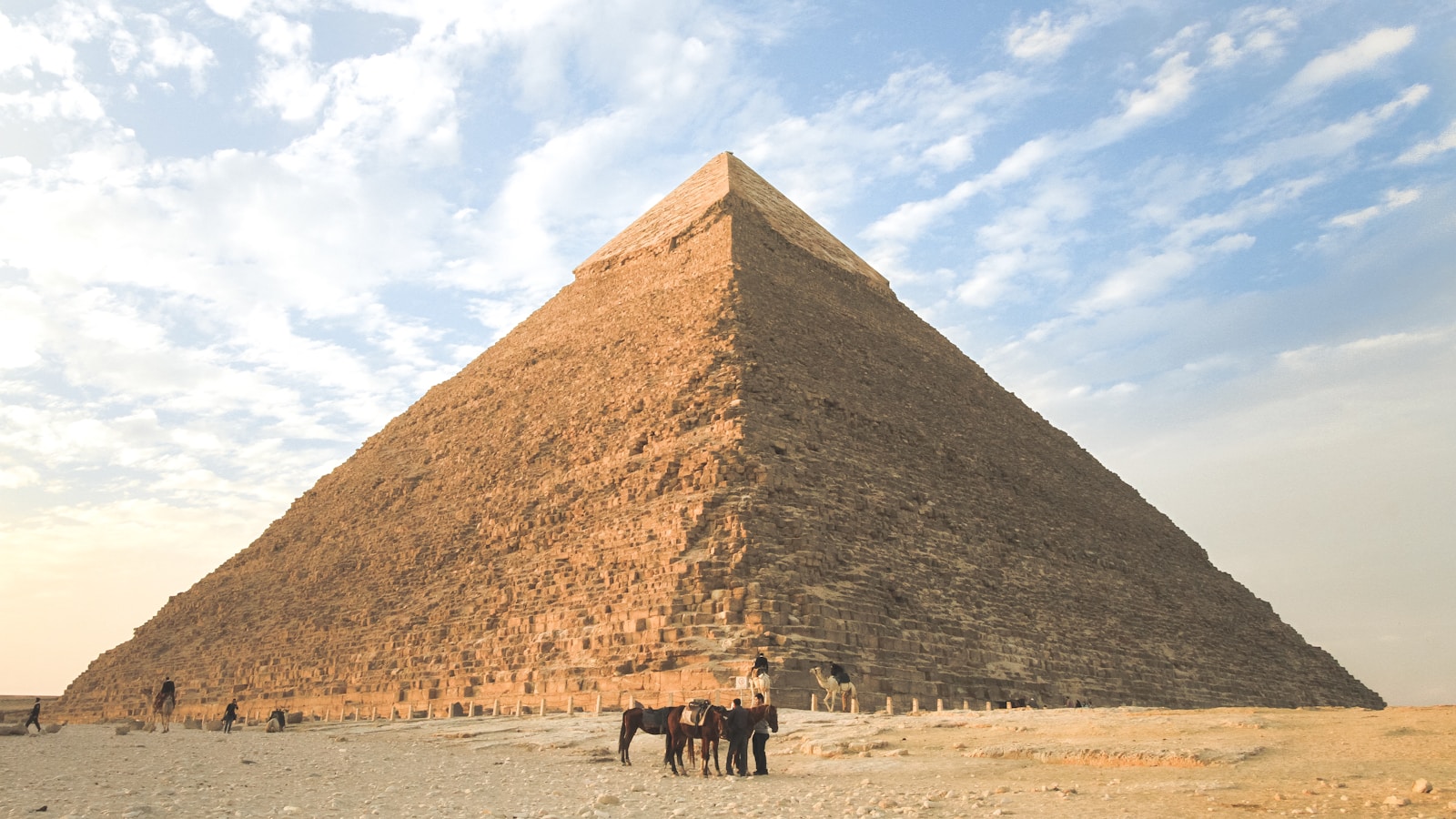
The pyramids of ancient Egypt stand as a testament to the mathematical knowledge of early civilizations. Their construction required precise measurements, an understanding of angles and proportions, and the ability to coordinate complex calculations across a massive scale of labor. The Egyptians developed a practical mathematics, one focused on measurement and calculation, and their achievements remind us that mathematics has always been driven by the desire to understand and shape the world. For SASMO students, the ancient roots of mathematics offer a powerful reminder that the subject is not an arbitrary invention but a response to real human needs.
Mathematics in the Ancient World
Across the ancient world, from Mesopotamia to the Indus Valley, from China to Mesoamerica, civilizations independently developed mathematical systems. They created number systems, explored geometry, tracked the movements of the heavens, and recorded their knowledge for future generations. The diversity of these early mathematical traditions is a testament to the universality of mathematical thinking, which seems to arise wherever human beings seek to understand their world.

Monuments like Stonehenge reveal that ancient peoples possessed a sophisticated understanding of astronomy and geometry, aligning massive stones with the solstices and equinoxes. This alignment required not only observation but measurement, calculation, and planning, all hallmarks of mathematical thinking. The lesson for modern students is that mathematics is not a modern invention but an ancient and universal human activity, one that connects them to every civilization that has ever sought to measure the stars.
The Preserved Knowledge of Ancient Civilizations
The preservation and transmission of mathematical knowledge is one of the great stories of human history. Ancient libraries collected manuscripts from across the known world, and scholars translated and studied the works of their predecessors, building on them and adding their own discoveries. This tradition of preserving and building on knowledge is what allowed mathematics to grow from simple counting to the rich discipline it is today.

The great libraries of the ancient world were centers of learning where mathematics, astronomy, and philosophy were studied together. Scholars in these institutions understood that knowledge grows through sharing and preservation, not through isolation. This insight is just as relevant today: students who share their ideas, study the work of others, and build on what has come before them are following the same path as the great mathematicians of history. Learning is a communal activity, and mathematics is a shared inheritance.
The Written Tradition: Passing Mathematics Forward
The development of writing was a crucial turning point in the history of mathematics. Before writing, mathematical knowledge could only be passed from person to person by word of mouth, limiting its growth and reach. With the invention of writing, mathematical ideas could be recorded, studied, corrected, and improved across generations and across continents. The written tradition transformed mathematics from a private skill into a public science.

The act of writing mathematics, of carefully setting down a proof or a calculation, is itself a discipline that sharpens thinking. From the scribes of ancient times to the students of today, putting mathematical ideas into words forces clarity and precision. For SASMO competitors, the habit of writing out solutions clearly is not just a way to communicate with others; it is a way to think more clearly, and it continues a tradition that stretches back thousands of years.
Mathematics and Astronomy
Throughout history, mathematics and astronomy have been closely linked. The desire to predict the movements of the planets, to create accurate calendars, and to navigate by the stars drove the development of trigonometry, spherical geometry, and numerical methods. The astronomers of the ancient and medieval worlds were mathematicians first, and their work laid the foundations for the scientific revolution that would follow.

The story of mathematics and astronomy is a story of how pure curiosity can lead to practical power. The desire to understand the heavens led to mathematics that later enabled navigation, timekeeping, and ultimately space travel. For students, this connection between mathematics and the cosmos is a reminder that the subjects they study are not isolated exercises but part of a grand human project to understand the universe. The trigonometry they learn today is the same trigonometry that guided ships across oceans and astronauts to the moon.
The Legacy of Mathematical Knowledge
The mathematical knowledge that students study today is the accumulated wisdom of countless generations. From the counting systems of ancient traders to the calculus of Newton and Leibniz, mathematics has been built step by step, each generation adding to the work of its predecessors. This legacy is a gift, and understanding it deepens a student's appreciation for what they are learning.

The shelves of a great library hold the record of this intellectual journey, and each book represents someone's effort to understand, to explain, and to advance the subject. When a student opens a mathematics textbook, they are joining a conversation that has been going on for thousands of years. This perspective can transform the experience of studying mathematics from a chore into a privilege, an opportunity to participate in one of humanity's greatest traditions.
The Spirit of Exploration
Mathematics has always been driven by the spirit of exploration. The great mathematicians of history were explorers of the mind, venturing into unknown territory and mapping the patterns they found there. They asked questions that no one had asked before, and they refused to be satisfied with incomplete answers. This spirit of intellectual adventure is the heartbeat of mathematics, and it is available to every student willing to be curious.
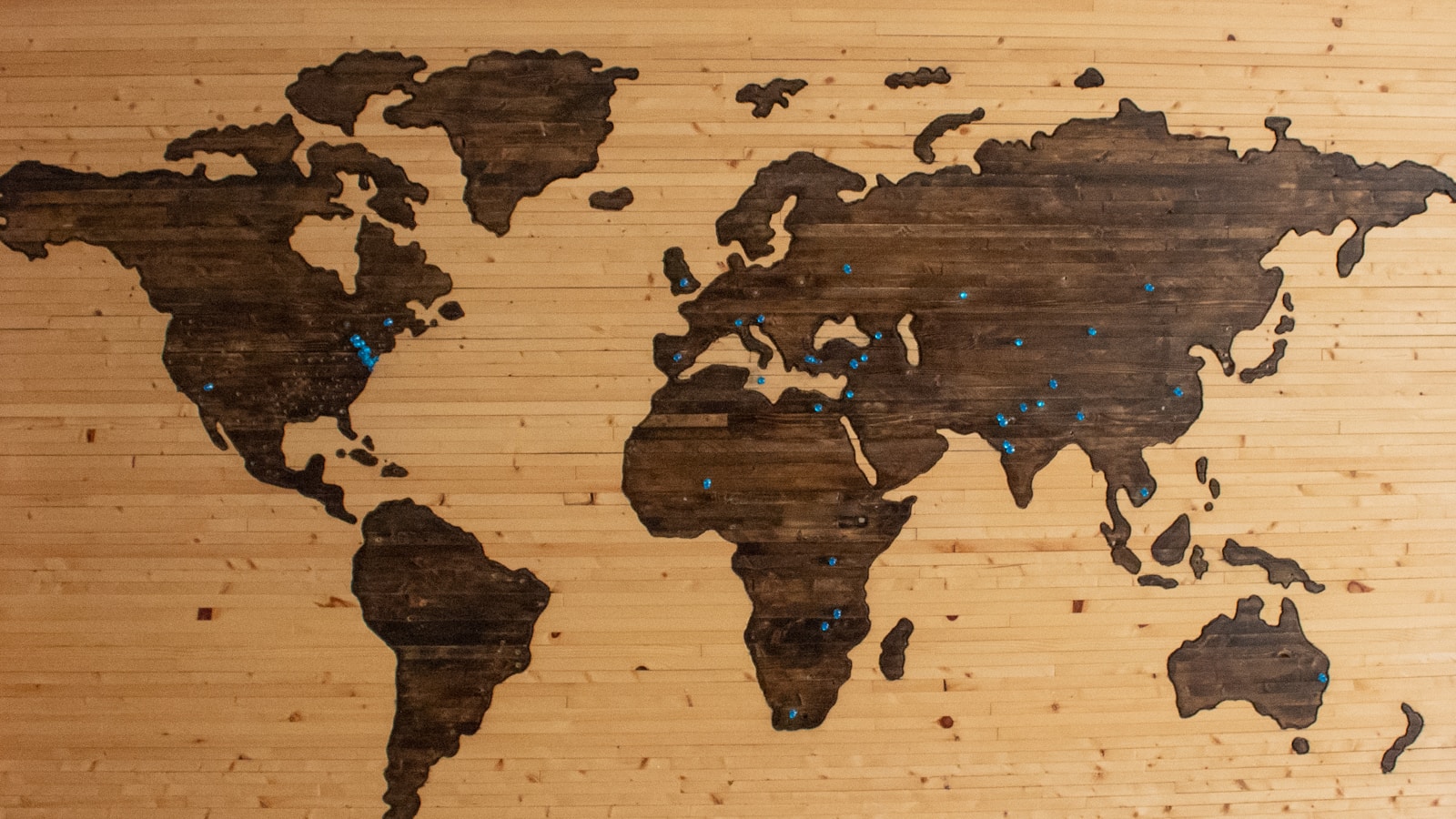
An old map, with its unknown regions marked and its promise of discovery, is a fitting image for the mathematical journey. Every student is an explorer, and every new topic is a territory waiting to be understood. The history of mathematics shows that the greatest discoveries often come from asking simple questions and refusing to stop until the answer is found. For SASMO competitors, this spirit of exploration is the key to both enjoyment and success, because mathematics is not a closed book but a living adventure, and every student has the chance to be part of it.
Standing on the Shoulders of Giants
The history of mathematics teaches humility and inspiration in equal measure. It teaches humility because it shows that every mathematical idea, no matter how simple it seems today, was once a hard-won discovery. And it teaches inspiration because it shows that the people who made those discoveries were not fundamentally different from the students learning mathematics today. They were curious, persistent, and willing to think deeply, and those qualities are available to anyone.
As SASMO competitors prepare for their challenges, they can draw strength from the knowledge that they are part of a great tradition. The mathematics they study is the same mathematics that built pyramids, guided ships, and sent rockets to the stars. It is a heritage of human genius, and every student who learns it adds their own chapter to the story. In mathematics, as in history, the past is not dead; it lives on in every mind that understands and every heart that is inspired.