

When students prepare for mathematics competitions like the Singapore and Asian Schools Math Olympiad (SASMO), most focus on what to study—which topics to cover, which problems to solve, which techniques to master. But equally important is how you study. Decades of research in cognitive science, neuroscience, and educational psychology have revealed powerful insights about how the human brain learns, remembers, and applies knowledge. Students who align their preparation strategies with these scientific findings can achieve dramatically better results with the same amount of effort. This article explores the most robust evidence-based learning strategies and shows you how to apply them specifically to math olympiad preparation.

How Memory Works: The Foundation of Effective Learning
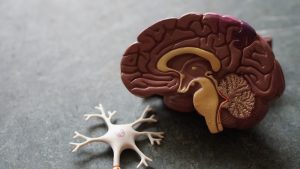
Before exploring specific strategies, it helps to understand how memory actually functions. When you encounter new information—whether it's a theorem, a problem-solving technique, or a calculation method—your brain must go through three stages to truly learn it. First comes encoding, where your brain processes the new information and connects it to existing knowledge. Next comes storage, where the information is maintained over time. Finally comes retrieval, where you access the stored information when you need it.
Many students struggle not because they fail at encoding or storage, but because they never practice retrieval. They read their notes, recognize the material, and assume they've learned it. But recognition is not the same as recall. In a competition setting, you need to retrieve techniques from memory under pressure, without your notes in front of you. Understanding this distinction between recognition and retrieval is the first step toward more effective preparation.
Your brain stores memories in networks of connected neurons. The more connections a memory has to other knowledge, the stronger and more accessible it becomes. This is why understanding why a technique works—connecting it to underlying principles—is far more effective than simply memorizing the steps. A technique stored in isolation is fragile and easily forgotten. A technique woven into a web of understanding is durable and readily available when you need it.
Spaced Repetition: The Antidote to Forgetting
One of the most robust findings in learning science is the spacing effect. Research consistently shows that spreading study sessions over time produces far better long-term retention than cramming the same material into a single intensive session. This finding has been replicated thousands of times across different subjects, age groups, and learning contexts—it is one of the most reliable results in all of psychology.

The reason spacing works relates to how forgetting functions. Each time you study something and then allow yourself to begin forgetting it before reviewing again, the act of re-learning strengthens the memory trace more powerfully than simply reviewing it while it's still fresh. This is sometimes called "desirable difficulty"—the slight struggle of retrieving a fading memory actually makes that memory stronger for the future.
For math olympiad preparation, this means you should revisit topics and techniques multiple times over weeks and months rather than studying them intensively once and moving on. If you learn a new number theory technique today, review it again in three days, then a week later, then two weeks later, then a month later. Each review takes less time than the original learning but dramatically extends how long you'll retain the knowledge.
Practically, this means your weekly study plan should include both new material and review of previously learned material. A common mistake is to study topic A this week, topic B next week, topic C the week after, and never return to A or B. Instead, each study session should touch on several topics, ensuring that previously learned material is regularly refreshed. This approach feels slower in the short term but produces vastly superior long-term retention.
Active Recall: Testing Yourself Into Mastery
Perhaps the single most powerful learning strategy identified by research is active recall—also known as retrieval practice or the testing effect. Instead of passively reviewing material by rereading notes or watching solution videos, you actively try to retrieve information from memory. This might mean solving a problem without looking at the solution, writing out a proof from memory, or explaining a technique to someone else without reference materials.
Research by psychologists like Henry Roediger and Jeffrey Karpicke has demonstrated that students who test themselves on material remember it significantly better than students who simply restudy the same material, even when both groups spend the same total amount of time. In one landmark study, students who practiced retrieval remembered 80 percent of material a week later, while students who restudied remembered only 36 percent—a dramatic difference produced by nothing more than changing how they engaged with the material.

For math olympiad preparation, active recall takes several forms. When you encounter a solved problem in a textbook, close the book and try to reproduce the solution from memory before checking. When you learn a new technique, create your own practice problems that require that technique and solve them without reference. After studying a topic, write down everything you remember about it on a blank sheet of paper, then check what you missed. These activities feel harder than passive review, but that difficulty is precisely what makes them effective.
The key insight is that the struggle of retrieval is not a sign of failure—it's the mechanism of learning. When you strain to recall a technique and eventually succeed, that memory becomes significantly stronger than if you had simply read it again. Even when you fail to recall something, the attempt primes your brain to encode it more deeply when you do review the answer. Every retrieval attempt, successful or not, strengthens your learning.
Interleaving: Mixing Problem Types for Deeper Learning
Most students naturally practice in blocks—they work on twenty algebra problems, then twenty geometry problems, then twenty combinatorics problems. While this blocked practice feels productive because you're solving problems successfully, research shows that interleaving—mixing different problem types within a single practice session—produces far better long-term learning and transfer.
The reason interleaving works is that it forces your brain to practice not just solving problems, but identifying which type of problem you're facing and selecting the appropriate strategy. In a real competition, problems come in random order with no labels telling you which technique to apply. Blocked practice removes this crucial discrimination step, while interleaving builds it. Students who practice with interleaved problem sets perform significantly better on tests where problem types are mixed—which is exactly the competition format.
Implementing interleaving in your SASMO preparation means creating practice sets that mix problems from different topics and difficulty levels. Instead of dedicating an entire session to geometry, solve a geometry problem, then a number theory problem, then an algebra problem, then a combinatorics problem. This will feel harder and more frustrating than blocked practice, and you'll solve fewer problems correctly during practice. But when competition day arrives, you'll be far better equipped to identify problem types and select appropriate strategies quickly.
It's worth noting that interleaving feels counterintuitive. Students consistently report that blocked practice feels more effective, even when their test performance says otherwise. This is because blocked practice produces quick success during practice sessions, creating an illusion of mastery. Trust the research over your feelings—embrace the discomfort of interleaving, knowing it's building the discrimination skills you'll need in competition.
The Critical Role of Sleep in Learning
Sleep is not merely the absence of wakefulness—it is an active period during which your brain consolidates learning, strengthens important memories, and discards irrelevant information. Research in neuroscience has shown that the memories formed during a study session are initially fragile and easily disrupted. During sleep, particularly during deep slow-wave sleep and REM sleep, these memories are transferred from the hippocampus to the neocortex, where they become stable, long-term knowledge.
This has profound implications for competition preparation. Students who sacrifice sleep to study more are actively undermining their learning. A student who studies for three hours and then gets eight hours of sleep will remember more than a student who studies for five hours and gets only six hours of sleep. The extra two hours of study cannot compensate for the lost consolidation that would have occurred during those two hours of sleep.
Research also shows that sleep immediately after learning is particularly important for consolidation. If you study a new technique in the evening before bed, that knowledge receives preferential consolidation during the night. This suggests that reviewing key material before sleep—perhaps briefly going over the day's most important learnings—can be more effective than the same review at another time of day.
Beyond memory consolidation, sleep affects cognitive performance in competition settings. Sleep deprivation impairs working memory, attention, processing speed, and creative problem-solving—all abilities essential for math olympiad performance. A well-rested student will outperform a sleep-deprived student of equal ability on competition day. Protecting your sleep in the days and weeks before SASMO is not optional—it's a critical component of peak performance.
Deliberate Practice: Quality Over Quantity
The concept of deliberate practice, popularized by psychologist Anders Ericsson, emphasizes that not all practice is equally effective. Simply solving many problems is not enough—effective practice requires focused attention on specific weaknesses, immediate feedback on performance, and progressively increasing difficulty. Ten hours of deliberate practice can be more valuable than fifty hours of unfocused problem-solving.

Deliberate practice in math olympiad preparation means identifying your specific weaknesses and targeting them directly. If you consistently struggle with combinatorics problems involving the pigeonhole principle, don't avoid them—seek them out specifically. Work on problems that are just beyond your current ability level, where you'll succeed sometimes but not always. This zone of proximal difficulty is where the most learning occurs. Problems that are too easy teach you nothing; problems that are impossibly hard teach you only frustration.
Feedback is another essential component of deliberate practice. After solving a problem—or attempting one and failing—study the solution carefully. Don't just note the answer; understand the reasoning, identify the key insight, and analyze where your thinking diverged from the correct approach. If you have a coach or study partner, discuss problems with them. Explaining your thinking and hearing alternative approaches provides feedback that solitary practice cannot.
The mental effort required for deliberate practice means you can only sustain it for limited periods—typically one to three hours per day at maximum intensity. This is not a limitation to overcome but a signal to respect. Shorter, more focused practice sessions with full concentration are more effective than marathon sessions where your attention wanders. Quality of engagement matters far more than quantity of hours logged.
Metacognition: Thinking About Your Thinking
Metacognition—the ability to monitor and regulate your own thinking processes—is one of the strongest predictors of academic success. Students with strong metacognitive skills know what they understand and what they don't, can assess whether their problem-solving approach is working, and can adjust their strategies when needed. In math olympiad competition, metacognition is the difference between spinning your wheels on an unproductive approach and recognizing when to try something different.
Developing metacognitive skills requires regular self-reflection during problem-solving. As you work on a problem, periodically pause and ask yourself questions: Am I making progress? Is this approach likely to lead somewhere? What assumptions am I making? Have I tried approaching this from a different angle? Do I recognize this problem type from previous experience? These internal check-ins help you manage your thinking more effectively and avoid wasting precious competition time on dead ends.

After practice sessions, metacognitive reflection extends to analyzing your overall performance. Which problems did you solve quickly, and why? Which ones stumped you, and what was the missing insight? Were there patterns in your errors—careless mistakes, misread questions, time management issues? Keeping a problem-solving journal where you record not just solutions but your thought processes helps develop this reflective habit and creates a valuable record of your growth over time.
Research shows that students who regularly engage in metacognitive monitoring improve faster than those who don't, even when both groups spend the same amount of time practicing. The act of reflecting on your learning makes the learning more explicit and therefore more accessible for future application. Make metacognitive reflection a regular part of your preparation routine, not an afterthought.
Managing Cognitive Load During Problem-Solving
Cognitive load theory, developed by educational psychologist John Sweller, explains why some learning activities are more effective than others based on how they interact with the limited capacity of working memory. Your working memory can hold only about four to seven items at once. When a problem or learning task overwhelms this capacity, learning suffers because your brain cannot process all the information simultaneously.
This theory has practical implications for how you approach both learning and competition. When learning a new complex technique, break it into smaller components and master each one before combining them. Trying to understand an entire multi-step proof at once may overwhelm your working memory, but understanding each step individually and then seeing how they connect is far more effective. This is called managing intrinsic cognitive load—reducing the inherent complexity of material to match your current processing capacity.
In competition, managing cognitive load means externalizing information to free up working memory. Write down given information clearly. Sketch diagrams. Note intermediate results. Each piece of information you put on paper is one less item occupying your limited working memory, freeing cognitive resources for the actual problem-solving. Students who work entirely in their heads often make errors not because they lack ability but because they've overloaded their working memory.
As you gain expertise in a topic, what once required conscious effort becomes automatic, freeing working memory for higher-level thinking. This is why building strong foundational skills matters—they become automated processes that no longer consume cognitive resources, allowing you to focus your limited working memory on the creative and strategic aspects of problem-solving. Automatize the basics so your conscious mind is free for the interesting thinking.
The Power of Elaborative Encoding
Elaborative encoding is the process of connecting new information to existing knowledge in meaningful ways. Research shows that the more deeply you process new material—the more connections you make to what you already know—the better you'll remember it. Shallow processing, like simply reading a formula, produces weak memories. Deep processing, like understanding why the formula works and how it relates to other concepts, produces strong, durable memories.

For math olympiad preparation, elaborative encoding means never learning a technique in isolation. When you learn a new inequality technique, ask yourself how it relates to other inequalities you know. When you encounter a combinatorics problem, consider whether algebraic methods could also solve it. When you learn a geometry theorem, explore its connections to algebra and trigonometry. Building these cross-connections creates a rich knowledge network where each concept reinforces and supports others.
One powerful elaborative technique is self-explanation—explaining material to yourself as you study it. When working through a solution, don't just read it passively. At each step, ask yourself why that step makes sense, what justifies it, and what would happen if you took a different approach. Research by Michelene Chi has shown that students who self-explain while studying learn significantly more than those who simply read, even when both groups spend the same amount of time.
Teaching others is another form of elaborative encoding. When you explain a technique to a study partner, you must organize your knowledge coherently, fill in gaps in your understanding, and articulate the reasoning behind each step. This process reveals what you truly understand versus what you merely recognize. If you can't explain a concept clearly to someone else, you don't fully understand it yourself—and identifying these gaps is invaluable for targeted improvement.
The Generation Effect: Learning by Creating
The generation effect is a well-established finding showing that information you generate yourself is remembered better than information you simply receive. When you struggle to produce an answer—even if you ultimately get it wrong—the act of generation creates stronger memory traces than passively reading the correct answer.
In math olympiad preparation, this means you should always attempt problems before looking at solutions. Even if you can't solve a problem completely, the time spent generating approaches, testing ideas, and exploring possibilities creates learning that reading the solution cannot replicate. When you eventually do read the solution, you'll understand it more deeply because you've already engaged with the problem actively.
Beyond solving problems, you can harness the generation effect by creating your own problems, writing your own summaries of techniques, and generating your own examples. When you create a problem that uses a particular technique, you must understand that technique deeply enough to construct a valid problem around it. When you write a summary of a topic in your own words, you process the material more deeply than re-reading someone else's summary ever could.
Building a Science-Based Weekly Study Plan
Integrating all these evidence-based strategies into a coherent weekly plan maximizes your preparation efficiency. A science-based plan looks quite different from the typical approach of solving as many problems as possible in marathon sessions. Instead, it incorporates spacing, retrieval practice, interleaving, sleep protection, and metacognitive reflection in a structured rhythm.

A typical study session might begin with a brief retrieval practice exercise—recalling key techniques from previous sessions without reference materials. The main portion of the session would involve interleaved problem-solving, mixing topics and difficulty levels, with deliberate practice targeting identified weaknesses. The session would end with metacognitive reflection—reviewing what was learned, what was difficult, and what needs further work. Between sessions, spaced review of older material ensures long-term retention.
Sleep must be protected as non-negotiable. No amount of extra study compensates for lost consolidation. Schedule your study sessions to end early enough that you can get eight to nine hours of sleep, especially during intensive preparation periods. A brief review of the day's key learnings before bed takes advantage of sleep-dependent consolidation to strengthen those memories overnight.
Weekly, include at least one session dedicated entirely to review and retrieval of material from previous weeks, not new content. This spacing review is where long-term retention is built. It may feel unproductive compared to learning new material, but it's actually where the deepest learning occurs. Without regular review, even well-learned material fades within weeks.
Overcoming the Illusion of Competence
One of the greatest challenges in applying learning science is that effective strategies often feel less productive than ineffective ones. Rereading notes feels comfortable and productive. Cramming the night before feels urgent and focused. Blocked practice produces immediate success that feels like mastery. Meanwhile, retrieval practice feels difficult, interleaving feels confusing, and spaced repetition feels slow.
This disconnect between feeling and reality is called the illusion of competence. Your subjective sense of how well you're learning is a poor guide to actual learning. The strategies that feel hardest—struggling to recall, mixing problem types, spacing reviews—are precisely the ones that produce the strongest long-term retention. You must trust the science over your feelings, especially in the early stages when effective strategies feel uncomfortable.
One way to combat this illusion is to regularly test yourself under realistic conditions. Take timed practice tests, solve problems without any reference materials, and explain concepts to others without preparation. These honest assessments reveal what you actually know versus what you merely recognize. They can be humbling, but they provide accurate feedback that guides your preparation more effectively than subjective feelings ever could.
The Role of Emotion and Motivation in Learning
Learning science doesn't operate in an emotional vacuum. Research shows that emotional state significantly affects encoding and retrieval. Moderate positive emotion enhances learning by broadening attention and increasing cognitive flexibility. Extreme anxiety, by contrast, narrows attention and impairs working memory, making both learning and performance more difficult.
This means that your emotional approach to preparation matters as much as your cognitive strategies. Students who approach practice with curiosity and interest learn more than those who approach it with dread and obligation. Finding genuine fascination in mathematical ideas—the beauty of an elegant proof, the surprise of an unexpected connection, the satisfaction of a hard-won solution—transforms preparation from a chore into an engaging intellectual adventure.
Managing competition anxiety is also part of evidence-based preparation. Research on stress and performance shows that moderate arousal enhances performance while excessive anxiety impairs it. Techniques like deep breathing, positive self-talk, and visualization can help regulate arousal to optimal levels. Reframing anxiety as excitement—research by Alison Wood Brooks shows that saying "I'm excited" rather than "I'm anxious" before a performance task actually improves outcomes—can transform a performance-hindering emotion into a performance-enhancing one.
Conclusion: Working With Your Brain, Not Against It
The science of learning offers a powerful framework for math olympiad preparation. By understanding how memory works, how retrieval strengthens knowledge, how spacing prevents forgetting, how sleep consolidates learning, and how metacognition guides improvement, you can transform your preparation from inefficient trial-and-error into a targeted, evidence-based process that maximizes every hour of study.
The beauty of these strategies is that they work regardless of your starting point or natural ability. A student of average talent who applies learning science rigorously will outperform a talented student who studies ineffectively. These are not tricks reserved for geniuses—they are tools available to anyone willing to study smarter rather than just harder.
As you prepare for SASMO or any mathematical challenge, remember that your brain is not a fixed vessel to be filled but a dynamic system that grows stronger with the right kind of use. Every retrieval attempt strengthens neural pathways. Every night of sleep consolidates your learning. Every moment of metacognitive reflection makes your knowledge more accessible. You are literally building a more capable brain with every study session—provided you study in ways that align with how your brain actually learns.
The science is clear: space your practice, test yourself relentlessly, mix your problem types, protect your sleep, reflect on your thinking, and engage deeply with the material. These strategies feel harder than passive review, but they produce learning that lasts. Trust the science, embrace the productive struggle, and watch your mathematical abilities grow in ways that surprised you. Your brain is the most powerful learning machine ever created—use it wisely.